SEO for fashion brands, often referred to as fashion brands SEO or fashion business SEO, optimizes visibility, user engagement, and conversion potential for fashion e-commerce websites. Fashion ecommerce SEO enhances search rankings for specific product queries, category pages, and seasonal collections, which allows fashion labels and online retailers to attract highly relevant traffic. Implementing fashion SEO requires technical optimization, structured content, and targeted keyword strategies that align with the competitive fashion industry.
The advantages of fashion ecommerce SEO include increased organic traffic, improved credibility, and higher conversion rates for both luxury and fast-fashion brands. Fashion brands local SEO strengthens regional presence and customer acquisition for brick-and-mortar stores, while on-page, off-page, and technical SEO strategies ensure sustained performance.
Selecting the right SEO agency for fashion e-commerce ensures expertise in fashion SEO, SEO for the fashion industry, and SEO for fashion e-commerce. A specialized agency executes end-to-end optimization, which includes content strategy, backlinks, and analytics, maximizing ROI and maintaining relevance in a fast-evolving marketplace.

What Does SEO Mean for Fashion Brands?
Fashion brand SEO defines the structured process by which fashion brands optimize their websites and content to increase visibility in search engines (Google, Bing, Yahoo!). Implementing SEO for fashion brands involves improving product pages, category pages, and digital assets to align with shopper intent and fashion industry trends. Each fashion eCommerce SEO effort strengthens discoverability for high-intent queries, which drives qualified traffic to fashion label websites.
Technical optimization forms a core pillar of fashion brand SEO, which ensures fast site speed, mobile-friendly design, and structured URLs. SEO for fashion labels integrates metadata, internal linking, and structured data to enhance search indexing. Optimized content, including product descriptions, blog posts, and collection guides, amplifies the effectiveness of fashion eCommerce SEO strategies by targeting both transactional and informational searches.
Long-term execution of fashion brand SEO increases brand authority and credibility in the fashion industry. Continuous refinement of SEO for fashion brands improves organic reach and maintains competitive positioning. Each fashion eCommerce SEO tactic builds recognition, attracts loyal customers, and reinforces the presence of the fashion brand across search platforms.
Is SEO Truly Necessary for Both Luxury and Fast-Fashion Brands?
Yes, SEO is necessary for both luxury fashion brand SEO and fast-fashion SEO because visibility drives organic traffic and potential revenue. Luxury fashion brand SEO focuses on authoritative content that emphasizes exclusivity, heritage, and craftsmanship, which establishes trust with high-value customers.
Fast-fashion SEO targets trend-based searches, volume-driven keywords, and sustainability topics, which align with seasonal demand and consumer behavior. Both forms of fashion brand SEO increase search engine discoverability, which ensures products, collections, and campaigns appear prominently in search results.
Fashion brand SEO for luxury labels prioritizes selective keyword targeting, premium content, and curated link-building from high-authority fashion publications. Fast-fashion SEO emphasizes frequent content updates, social signals, and broad keyword coverage to capture high search volumes. Both strategies improve organic traffic and lead generation for fashion eCommerce platforms.
Effective fashion brand SEO improves overall brand authority and relevance in the fashion industry. Luxury and fast-fashion SEO maintain competitive positioning by addressing search trends, shopping behavior, and market demand. Optimized fashion eCommerce SEO ensures measurable growth and long-term online presence.
What Are the Key Advantages of Implementing SEO Strategies for Fashion Brands?
The key advantages of fashion brand SEO lie in increased visibility, organic traffic growth, and measurable business outcomes that strengthen overall online presence. Implementing fashion brand SEO strategies enhances search engine rankings, engages potential customers, and builds lasting authority in the fashion industry. The key benefits of implementing SEO strategies are listed below.
- Increased Organic Traffic: Fashion brand SEO improves visibility for queries such as “sustainable streetwear” or “luxury evening gown,” which attracts highly relevant visitors actively seeking products. Targeted traffic increases the likelihood of conversions and repeat visits.
- Enhanced Brand Credibility: High search rankings combined with optimized product descriptions, authoritative blog content, and structured metadata position fashion brands as trusted leaders in the fashion industry.
- Targeted Customer Acquisition: Fashion brand SEO directs shoppers with clear purchase intent toward specific collections, seasonal launches, or limited-edition items, resulting in higher-quality leads and improved sales metrics.
- Improved User Experience: Optimized website architecture, mobile responsiveness, and fast-loading pages enhance navigation and engagement. Customers find products quickly, which leads to longer sessions and lower bounce rates.
- Competitive Advantage: Fashion brand SEO positions brands above competitors in search results for high-value keywords. This advantage increases brand visibility, strengthens recognition, and captures market share in crowded categories.
- Long-Term Marketing ROI: Continuous fashion brand SEO efforts maintain rankings for key queries, reduce reliance on paid advertising, and generate compounding returns through evergreen content and optimized product pages.
Fashion brand SEO provides measurable growth, strengthens eCommerce performance, and reinforces the overall reputation and visibility of the fashion label.
Is SEO for Fashion Brands Different from SEO for Lifestyle or Retail Brands?
SEO for fashion brands differs from lifestyle or general retail SEO because fashion brand SEO emphasizes visual assets, seasonal campaigns, and precise product-focused keywords. Fashion brand SEO strategies optimize high-quality images for visual search, use descriptive alt text, and maintain a mobile-friendly design that enhances engagement and user experience. Visual content, which includes product photography, lookbooks, and videos, integrates directly into search optimization and drives traffic differently than broader retail content.
Keyword strategy in fashion brand SEO relies on long-tail, descriptive search terms that reflect style, material, and season, such as “linen high-waist midi skirt navy.” Retail SEO typically targets broader product categories, while fashion brand SEO tracks rapidly changing trends, seasonal launches, and emerging styles to maintain relevance in competitive search results. Search intent alignment focuses on both aesthetic appeal and product specificity.
The competitive and volatile nature of the fashion industry demands constant monitoring and content refreshes. Fashion brand SEO requires agile updates to blog posts, style guides, and collection pages to match seasonal trends and high-demand searches, which ensures the brand maintains authority and visibility relative to lifestyle or general retail competitors.
Is SEO for Fashion Brands Different from SEO for Fast Fashion Brands?
SEO for fashion brands differs from SEO for fast fashion brands because fast fashion SEO emphasizes trend responsiveness, affordability messaging, and large-scale user-generated content campaigns targeting younger, value-conscious audiences.
Fashion brand SEO, including luxury and heritage brands, prioritizes long-tail keywords focused on exclusivity, quality, and craftsmanship, with visual storytelling driving engagement and brand authority. Both approaches require technical SEO, mobile optimization, and image optimization, but the strategic focus diverges according to audience expectations, product lifecycle, and brand identity.
Fast fashion SEO strategies target high-volume, trend-specific keywords, create content that adapts rapidly to emerging styles, and leverage sustainability messaging relevant to younger consumers. Luxury or traditional fashion SEO emphasizes long-tail keywords, high-quality visual assets, and content that communicates prestige and timelessness. Both strategies align with search intent but differ in scope, volume, and content type.
Shared practices across all fashion brands include mobile-first design, optimized site speed, proper schema implementation, localized content for international markets, backlink acquisition, and conversion rate optimization. These foundational SEO tactics provide baseline visibility, while the strategic differentiation between fast fashion and broader fashion brand SEO defines market positioning and online performance.
What Are the Most Effective Ways for Fashion Brands to Get Started with SEO?
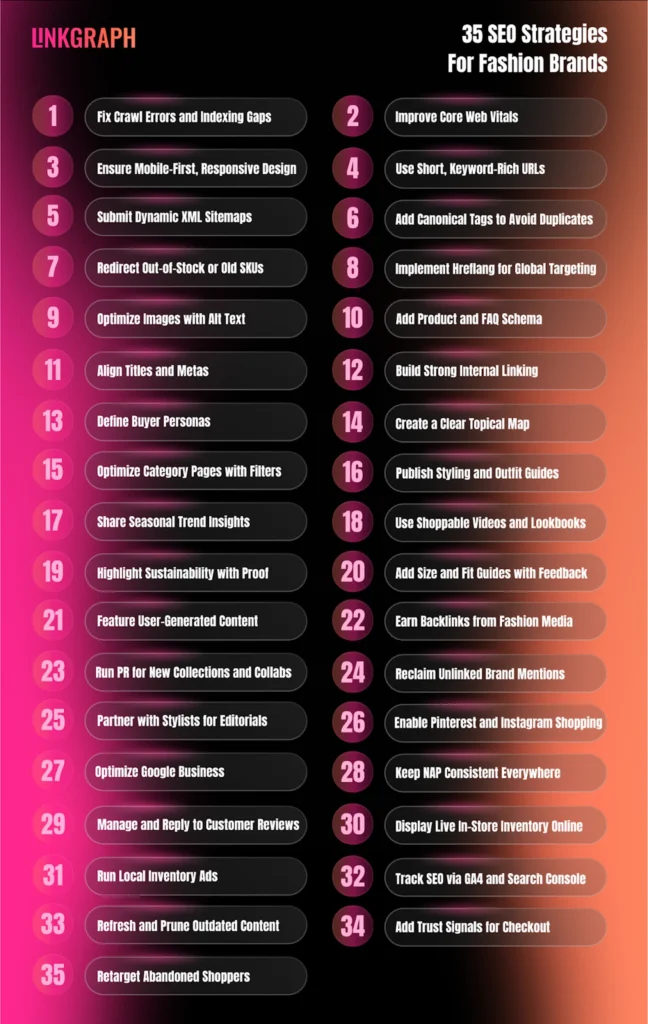
The most effective SEO strategies for fashion brands combine technical optimization, content strategy, and off-page authority to maximize visibility, engagement, and conversions. There are 35 SEO strategies for fashion brands. The 35 SEO strategies for fashion brands are listed below.
- Conduct a Technical SEO Audit to Fix Crawl Errors and Indexing Gaps
- Optimize Core Web Vitals with Image Compression, Lazy Loading, and CDN
- Ensure Mobile-First Rendering and Cross-Device Responsiveness
- Structure URLs with Short, Keyword-Rich, and Hierarchical Paths
- Generate Dynamic XML Sitemaps and Submit to Search Engines
- Apply Canonical Tags to Prevent Duplicate Indexation
- Set 301 Redirects for Out-of-Stock or Retired SKUs
- Implement Hreflang Tags for Accurate International Targeting
- Optimize Images with Alt Text, Titles, and Structured Metadata
- Add Product and FAQ Schema for Rich Snippets and SERP Features
- Align Title Tags and Meta Descriptions with Search Intent and CTR
- Build an Internal Linking Network Using Category and Contextual Links
- Define Buyer Personas from Style, Seasonality, and Shopping Behavior
- Construct Topical Map Based on Your Source Context
- Optimize Category and Collection Pages with Faceted Navigation Controls
- Create “How to Style” Guides and Outfit Pairing Content
- Publish Seasonal Trend Forecasts with Editorial Authority
- Develop Shoppable Videos and Interactive Lookbooks for Engagement
- Showcase Brand Sustainability with Data, Proof, and Storytelling
- Provide Size and Fit Guides Backed by Customer Feedback Data
- Curate User-Generated Content Galleries to Boost Social Proof
- Acquire Backlinks from Fashion Publishers, Blogs, and Influencers
- Launch PR Campaigns Around New Collections and Designer Collabs
- Reclaim Unlinked Mentions with Outreach and Link Insertions
- Partner with Stylists to Create Exclusive Editorial Content
- Activate Pinterest Rich Pins and Instagram Shopping Integrations
- Optimize Business Profiles with Attributes, Posts, and Q&A
- Keep NAP Data Uniform Across All Directories and Listings
- Collect and Respond to Customer Reviews to Influence Local SEO
- Display Real-Time In-Store Inventory on Google Business Profile and Bing
- Run Local Inventory Ads to Capture High-Intent Local Shoppers
- Track Organic Performance via GA4 and Search Console
- Audit Content Regularly to Refresh and Prune Dead Weight
- Add Visible Trust Signals for Secure Checkout and Easy Returns
- Deploy Dynamic Remarketing to Re-Engage Abandoned Visitors
Implementing this structured SEO roadmap positions fashion brands for higher search visibility, increased user engagement, and measurable revenue growth.
1. Conduct a Technical SEO Audit to Fix Crawl Errors and Indexing Gaps
Fashion brand SEO begins with a technical audit, which identifies crawl errors, indexing gaps, and site structure inefficiencies. Server response time should remain under 100 milliseconds to accelerate page loading and improve search engine access. HTML crawl requests must exceed 95 percent to ensure search engines index all relevant fashion ecommerce pages efficiently.
Refresh rates around 20 percent maintain content relevance without overloading crawl activity, while discovery rates of 7–8 percent guarantee new collections, product pages, or editorial updates appear promptly in search results. Performing log file analysis identifies where most of the crawl budget is lost, which reveals pages that consume excessive bot activity or fail to index properly.
Fixing crawl errors includes repairing broken links, resolving duplicate content, and implementing canonical tags to prevent indexing conflicts. This foundational technical audit ensures smooth indexing, accurate search engine access, and higher visibility for fashion brand SEO campaigns, which improves overall search performance.
2. Optimize Core Web Vitals with Image Compression, Lazy Loading, and CDN
Fashion brand SEO requires Core Web Vitals optimization to improve user experience and search engine rankings. Largest Contentful Paint (LCP) must load quickly, which is achievable through image compression that reduces file size without sacrificing visual quality. First Input Delay (FID) should remain low, which benefits from efficient script management and minimal render-blocking resources.
Cumulative Layout Shift (CLS) requires stability in visual elements, which lazy loading achieves by rendering images and videos only when they enter the viewport. Content Delivery Networks (CDN) distribute assets across multiple servers, lowering latency for global audiences and ensuring faster page response for all fashion ecommerce pages.
Optimizing Core Web Vitals increases engagement metrics, reduces bounce rates, and improves ranking potential. Image compression, lazy loading, and CDNs collectively enhance the speed, stability, and interactivity of fashion brand websites, strengthening both user experience and organic visibility.
3. Ensure Mobile-First Rendering and Cross-Device Responsiveness
Mobile-first rendering prioritizes smartphone displays, which aligns with fashion ecommerce user behavior and search engine expectations. Pages that are present consistently across multiple devices maintain interface clarity and navigation efficiency. Cross-device responsiveness guarantees that content, images, and interactive elements function uniformly on tablets, desktops, and mobile devices.
Flexible layouts, scalable typography, and adaptive images preserve visual hierarchy and usability across screen sizes, which increases engagement and indexing accuracy. Rendering adjustments reduce layout shifts and optimize touch-target elements, improving user interaction metrics that search engines consider.
Device testing detects broken elements, misaligned visuals, or performance lags, which allows immediate corrective actions. Implementing mobile-first and cross-device responsive strategies decreases bounce rates, maximizes session duration, and strengthens fashion brand SEO performance for product discovery and visual search queries.
4. Structure URLs with Short, Keyword-Rich, and Hierarchical Paths
Fashion brand SEO benefits from URLs that are concise, descriptive, and keyword-focused, which improves both search engine indexing and user comprehension. Short URLs reduce complexity and make it easier for crawlers to identify main categories, products, and content hierarchy. Hierarchical paths reflect site architecture, connecting categories, subcategories, and individual product pages in a logical sequence.
Keyword-rich URLs integrate primary search terms naturally, enhancing relevance signals for fashion ecommerce queries like “sustainable-linen-midi-dress” or “unisex-streetwear-hoodie.” This alignment between URL and content strengthens topical authority and increases click-through rates from search engine results pages.
Consistent URL conventions across product collections, seasonal trends, and editorial content prevent duplicate content issues and make link-sharing easier. Structured URL hierarchies assist internal linking strategies, enabling fashion brands to distribute link equity effectively while improving navigation for both users and search engines.
5. Generate Dynamic XML Sitemaps and Submit to Search Engines
Dynamic XML sitemaps list all active product pages, category pages, and editorial content, which improves search engine crawling efficiency. Automatically updating the sitemap with new products, seasonal collections, or blog posts ensures search engines index current content without manual input.
Including metadata such as priority levels, last modified dates, and canonical URLs communicates page importance and content freshness to search engines. This structure enhances crawl efficiency for large e-commerce websites with multiple product variations, collections, and landing pages, reducing the risk of orphaned content.
Submitting sitemaps to Google Search Console, Bing Webmaster Tools, and other search engines allows monitoring of indexing status, detection of errors, and optimization of crawl budget allocation. Regular validation of the XML sitemap ensures maximum visibility, improved organic rankings, and faster indexing of newly published fashion brand content.
6. Apply Canonical Tags to Prevent Duplicate Indexation
Canonical tags indicate the preferred version of a URL when multiple pages contain similar or identical content, preventing duplicate indexation. This preserves link equity, ensuring search engines attribute authority to the main page instead of dividing it among duplicates.
Fashion ecommerce websites often feature multiple URLs for the same product, such as different color variants, sizes, or tracking parameters. Implementing canonical tags on these variations consolidates ranking signals and directs search engines to index the primary page, reducing content dilution.
Regular audits of canonical implementations identify missing or misconfigured tags, which cause indexing errors or competing pages. Proper canonicalization improves overall site architecture, maintains consistent rankings, and enhances the visibility of primary fashion brand content in search engine results pages.
7. Set 301 Redirects for Out-of-Stock or Retired SKUs
Products that go out of stock or are permanently removed from a fashion ecommerce site require 301 redirects to maintain user experience and SEO value. A 301 redirect informs search engines that a page has permanently moved to a new location, transferring nearly all of its link equity to the target URL. Without proper redirection, discontinued product pages lead to 404 errors, fragmenting authority, increasing bounce rates, and wasting valuable crawl budget.
Fashion brands experience constant inventory turnover—seasonal collections, limited editions, or trend-based SKUs often go offline quickly. Instead of deleting these pages, it’s best practice to redirect them to a relevant destination, such as the parent category, a similar product, or a “New Arrivals” page. This keeps visitors engaged and maintains continuity in the buyer journey, reducing frustration and improving conversion opportunities.
Effectively reaching global shoppers requires fashion brands to tailor both content and technical elements for each target market. Regular audits detect outdated redirects and broken links, while automation tools or server rules simplify large-scale updates. Implementing structured 301 redirects allows fashion retailers to protect organic rankings, preserve authority from backlinks, and ensure a smooth user experience across evolving product catalogs.
8. Implement Hreflang Tags for Accurate International Targeting
In global fashion brand SEO, implementing hreflang tags ensures that search engines display the correct language and regional version of a webpage to users in different markets. This is essential for e-commerce websites that operate across multiple countries, as it prevents duplicate content across URLs with similar content in different languages. Proper hreflang configuration strengthens localization signals, ensuring users reach pages that match their linguistic and cultural expectations.
Each localized version must include accurate hreflang attributes such as en-us, fr-fr, or ja-jp, paired with self-referencing tags and return links between versions. This structure allows search engines to interpret relationships between alternate pages and distribute visibility correctly across international markets.
Fashion retailers should validate their hreflang setup through Google Search Console or XML sitemaps to detect inconsistencies. Combined with localized content, metadata, and structured data, hreflang tags enhance international visibility and improve user experience for diverse audiences.
9. Optimize Images with Alt Text, Titles, and Structured Metadata
Images play a central role in fashion brand SEO, as visual content drives engagement, conveys product quality, and enhances visual search. Optimizing images improves page performance and ensures search engines interpret the content accurately. Each image requires descriptive alt text that specifies the product, material, color, or style, allowing search engines to index images while assisting accessibility tools.
Titles and captions reinforce context, linking visuals to relevant keywords and user intent. Structured metadata, such as a schema for product images, provides explicit signals to search engines about the image type, associated product, and other attributes. This creates a stronger connection between visual assets and page relevance in search results.
Fashion retailers should compress and format images for fast loading without quality loss. Proper optimization enhances Core Web Vitals, reduces bounce rates, and increases organic visibility. Combining alt text, titles, and structured metadata ensures images contribute to higher rankings and a richer user experience.
10. Add Product and FAQ Schema for Rich Snippets and SERP Features
Implementing product and FAQ schema enhances fashion brand SEO by providing structured data that search engines read to display rich snippets in search results. Product schema includes details such as name, SKU, price, availability, brand, and reviews, which increases visibility and click-through rates for fashion e-commerce sites.
The FAQ schema allows common customer questions about sizing, materials, returns, or styling tips to appear directly in SERPs. This improves brand authority, user engagement, and reduces search friction. Integrating the FAQ schema alongside product schema creates a cohesive structure that search engines recognize as highly relevant content for fashion shoppers.
Brands must maintain accurate, complete, and up-to-date structured data to prevent errors in indexing and ensure accurate representation. Combined with optimized images, meta tags, and internal linking, schema implementation enhances the relevance of the fashion site, attracts qualified traffic, and strengthens its overall search presence, particularly for product-focused queries and style guidance searches.
11. Align Title Tags and Meta Descriptions with Search Intent and CTR
Title tags and meta descriptions act as the first point of interaction between fashion brand SEO and potential shoppers in search results. Crafting title tags that include targeted keywords, collection names, or seasonal trends signals relevance to search engines and encourages clicks. Meta descriptions summarize page content while emphasizing unique selling points, materials, or styling benefits to attract attention in crowded SERPs.
Aligning these elements with search intent ensures that the content matches what users are actively looking for, whether informational, navigational, or transactional queries. For example, a “sustainable linen blazer for men” title communicates precise intent while meta text highlights availability, sizing, or eco-certifications.
Monitoring click-through rates (CTR) provides feedback on effectiveness, allowing refinement of wording, keyword placement, and formatting. Consistently optimized title tags and meta descriptions strengthen fashion e-commerce visibility, improve engagement, and drive qualified organic traffic that converts into sales.
12. Build an Internal Linking Network Using Correct Hierarchy (Root>Seed>Node)
Internal linking establishes a structured navigation system that enhances fashion brand SEO by guiding both users and search engines through relevant pages. The Root>Seed>Node hierarchy organizes content with a primary root page, related seed pages, and detailed node pages that expand on specific topics or products. This hierarchy ensures important pages receive link equity while related content clusters remain interconnected.
Linking from high-authority pages to category or collection pages signals relevance and strengthens topical authority. For example, a root page on “Summer 2025 Collection” links to seed pages like “Men’s Linen Blazers” and node pages such as “Beige Linen Blazer with Eco Certification,” which deepens context and relevance.
Strategic anchor text selection and contextual placement reinforce keyword relevance, improve crawlability, and distribute page authority efficiently. A well-structured internal linking network increases organic visibility, enhances user experience, and boosts conversion by guiding shoppers through relevant product journeys.
13. Define Buyer Personas from Style, Seasonality, and Shopping Behavior
Defining buyer personas allows fashion brand SEO strategies to target audiences with precision, aligning content with style preferences, seasonal trends, and shopping behavior. Personas include demographic data, fashion interests, purchasing habits, and preferred channels, which guide content creation and keyword targeting. Each persona represents a distinct customer segment that interacts with the brand differently, optimizing product pages, blog content, and category structures.
Topical mapping integrates smoothly with persona development by linking each persona to relevant content clusters. For instance, a persona focused on sustainable fashion in spring trends connects to a topical map with seed pages for eco-friendly materials, seasonal lookbooks, and product guides. This mapping ensures content addresses specific persona needs, enhancing engagement and relevance.
Persona-informed content enables precise internal linking, optimized metadata, and targeted schema usage. Combining buyer personas with topical maps increases organic visibility, improves user experience, and drives higher conversion rates by guiding visitors to content aligned with their preferences.
14. Construct Topical Map Based on Your Source Context
Constructing a topical map organizes fashion brand SEO content into a structured hierarchy, connecting core topics, subtopics, and related content. This map allows search engines to understand content relationships, while guiding users through product categories, style guides, and trend-focused articles. Topical maps define the root nodes, seed nodes, and related nodes, creating logical clusters that improve indexing, relevancy, and discoverability.
Source context informs the selection of topics, ensuring content aligns with brand positioning, seasonal trends, and shopper intent. For example, a spring collection cluster might include product pages, styling guides, influencer features, and sustainability articles, all linked under a central theme. Each node contributes to a coherent content ecosystem that targets relevant keywords and long-tail queries.
Implementing topical mapping enhances internal linking strategies and strengthens on-page SEO signals. It increases organic visibility for high-value search terms, drives targeted traffic to fashion e-commerce pages, and improves engagement metrics by directing users to contextually relevant content across the site.
15. Optimize Category and Collection Pages with Faceted Navigation Controls
Optimizing category and collection pages improves fashion brand SEO by making product discovery intuitive and search-engine-friendly. Faceted navigation allows users and search engines to filter products by attributes such as size, color, material, or style, which creates multiple indexable URLs aligned with shopper intent. Proper implementation ensures relevance without causing duplicate content issues or crawl inefficiencies.
Category pages must include keyword-rich headings, descriptive content, and structured data to communicate context to search engines. Collection pages should highlight seasonal trends, curated outfits, or promotional bundles, linking to related products and editorial content, which strengthens internal linking and topical relevance.
Faceted navigation must balance user experience and technical SEO by controlling URL parameters, canonicalization, and filter indexation. Well-optimized pages increase organic visibility, attract qualified traffic, and drive conversions for fashion e-commerce stores. They reinforce topical authority by clustering related products and content around central themes.
16. Create “How to Style” Guides and Outfit Pairing Content
Fashion brand SEO benefits from content that educates and inspires shoppers, including how-to style guides and outfit pairing suggestions. Guides that combine products, colors, and seasonal trends create context-rich pages that align with user intent and search queries, increasing organic visibility. These pages connect to category and product pages, reinforcing internal linking structures and topical authority.
Outfit pairing content should include descriptive headings, high-quality images, and structured metadata to communicate relevance to search engines. Linking to individual product pages within guides ensures smooth navigation and encourages conversions while signaling contextual relationships across the website.
Such content enables long-tail keyword targeting for specific styles or seasonal looks. Publishing regular guides around trends, events, or capsule wardrobes strengthens the presence of the fashion brand in search results, engages users, and drives qualified traffic to e-commerce product listings.
17. Publish Seasonal Trend Forecasts with Editorial Authority
Seasonal trend forecasts establish fashion brand SEO authority by aligning content with upcoming styles and consumer demand. Forecasts that analyze color palettes, fabrics, and silhouettes create highly relevant pages that attract trend-focused traffic. Linking forecasts to product collections reinforces internal site hierarchy and topical authority, signaling relevance to search engines.
Editorial authority requires detailed analysis, high-quality imagery, and structured content that highlights the expertise of the fashion brand. Including quotes from designers, stylists, or market research data adds credibility while connecting seasonal insights to specific product pages.
Publishing timely trend forecasts enhances long-tail keyword targeting, captures early search interest, and drives engagement. Search engines recognize authoritative seasonal content, improving rankings for trend-related queries, increasing organic visibility, and positioning the fashion brand as a go-to source for current and upcoming fashion insights.
18. Develop Shoppable Videos and Interactive Lookbooks for Engagement
Shoppable videos and interactive lookbooks enhance fashion brand SEO by combining visual storytelling with actionable product links, driving both engagement and conversions. Videos that highlight outfits, styling tips, and collection launches attract longer session durations, signaling relevance to search engines. Lookbooks structured around categories or seasonal themes reinforce internal linking and topical authority, connecting content to product pages.
Interactive content includes embedded purchase options, hover-over product details, and clickable style guides, which improve user experience while increasing direct conversions. High-quality visuals paired with descriptive metadata and schema markup enhance discoverability in search results, including rich media snippets.
Regularly updating videos and lookbooks to reflect seasonal collections, trending styles, or influencer collaborations maintains freshness and topical relevance. Search engines prioritize interactive, engaging content, boosting rankings for targeted fashion keywords, increasing organic traffic, and reinforcing the digital authority of the brand in the fashion e-commerce space.
19. Showcase Brand Sustainability with Data, Proof, and Storytelling
Sustainability within fashion brand SEO involves communicating measurable ethical practices through verified data and credible storytelling. Brands display transparency by publishing lifecycle analyses, carbon offset records, or certifications that prove accountability in production. These data points create trust signals that increase visibility for fashion e-commerce sites competing within the sustainable fashion segment.
Narrative-driven content describing sourcing methods, eco-materials, and supplier integrity strengthens topical depth while connecting environmental responsibility with consumer values. Each sustainability statement backed by real metrics improves search visibility for queries such as “ethical clothing brand” or “eco-friendly fashion label.” High-quality visuals and structured metadata enhance indexation accuracy and presentation in rich search features.
Consistent updates documenting progress or achievements maintain topical freshness and signal authority to search engines. This practice enables fashion brands to position sustainability not as marketing rhetoric but as a verified and measurable commitment that drives organic discovery and user trust.
20. Provide Size and Fit Guides Backed by Customer Feedback Data
Fashion brand SEO improves user experience and reduces return rates by integrating precise size and fit guides validated through real customer feedback. These guides include measurements, model references, and material stretch details that assist shoppers in making confident purchase decisions. Incorporating schema markup allows search engines to index these attributes accurately, improving product visibility in structured search results.
Aggregated review data, including user-submitted fit accuracy and satisfaction ratings, strengthens semantic relevance around sizing intent queries such as “true-to-size denim” or “slim-fit cotton shirt.” This approach creates contextual depth, connecting user-generated insights with on-page optimization signals. Structured feedback loops align fashion e-commerce platforms with search behavior patterns tied to fit reliability and comfort.
Regular updates to these guides maintain accuracy as collections evolve across seasons. Transparent presentation of customer-based sizing insights establishes credibility, increases engagement metrics, and improves both conversion likelihood and organic ranking stability within competitive apparel categories.
21. Curate User-Generated Content Galleries to Boost Social Proof
Customer-generated visuals play a central role in fashion ecommerce optimization since they display genuine experiences with products in real contexts. These visuals, featured in user-generated content (UGC) galleries, connect product authenticity with buyer confidence. Each submission mirrors the aesthetic of the brand and reinforces credibility that algorithmic models and audiences both recognize as trust signals.
Well-structured galleries include product identifiers, descriptive tags, and customer details that enable search engines to categorize and rank image-based assets more accurately. This structured approach creates contextual depth between fashion products, user lifestyles, and brand narratives. Seasonal updates maintain relevance while ensuring alignment with new collections and emerging styles.
Incorporating these galleries within product, collection, and campaign pages increases on-site engagement and click depth. Real users replace studio imagery with relatable authenticity, which strengthens organic ranking potential and improves purchase intent throughout the browsing process.
22. Acquire Backlinks from Fashion Publishers, Blogs, and Influencers
High-quality backlinks from reputable fashion sources form a foundational element of SEO for fashion brands. Links from trusted publishers, editorial magazines, and fashion blogs signal topical authority to search engines, increasing credibility and improving organic rankings. These backlinks act as external endorsements that connect brand identity with recognized voices within the fashion industry.
Outreach to digital magazines, influencer networks, and niche fashion bloggers generates link equity that strengthens domain authority. Each collaboration must align with brand values, style positioning, and product categories, allowing backlinks to appear naturally within relevant editorial content. Inclusion in “best brand” roundups or seasonal styling features reinforces both authority and visibility.
Partnership diversification across influencers, stylists, and media portals amplifies the digital footprint. Consistent monitoring of referring domains ensures backlink quality remains high and spam-free. Over time, this structured acquisition builds long-term search relevance and sustainable visibility in competitive fashion e-commerce markets.
23. Launch PR Campaigns Around New Collections and Designer Collabs
PR campaigns centered on new collections or designer collaborations drive both brand awareness and SEO value. Press releases, digital media coverage, and online features from industry publications create high-authority backlinks that signal relevance to search engines. These campaigns extend reach to fashion enthusiasts, stylists, and editors, reinforcing brand authority in the fashion industry.
Coordinating timed launches with media outlets ensures maximum visibility during key shopping periods or seasonal trends. Campaigns highlighting unique design elements, sustainable practices, or collaboration narratives strengthen content relevance and engagement. Each campaign acts as a signal that the fashion brand produces noteworthy, topical content that search engines recognize.
Monitoring earned media coverage and referral links maintains campaign effectiveness and identifies opportunities for additional outreach. Over time, structured PR campaigns enhance both organic traffic and brand prestige, establishing a consistent presence in fashion ecommerce searches and improving search rankings for targeted keywords.
24. Reclaim Unlinked Mentions with Outreach and Link Insertions
Reclaiming unlinked brand mentions increases domain authority and directs relevant traffic to key product or category pages. Identifying instances where fashion brands are cited without proper backlinks allows targeted outreach to publishers, editors, or bloggers who insert contextual links. This strengthens the link profile and signals brand relevance to search engines.
Tracking mentions across industry blogs, fashion forums, and media articles ensures no opportunity is overlooked. Each successfully converted mention creates high-quality, relevant inbound links that enhance both topical authority and SEO performance.
Combining outreach with structured link insertions integrates unlinked references into a cohesive internal linking strategy. Over time, this process improves visibility for product-focused keywords, reinforces credibility in the fashion industry, and contributes to sustained organic traffic growth across fashion ecommerce searches.
25. Partner with Stylists to Create Exclusive Editorial Content
Collaborating with professional stylists generates authoritative editorial content that highlights fashion brand expertise. Each stylist contribution produces unique articles, lookbooks, or style guides that align with the image and seasonal collections of the brand, enhancing topical authority.
These collaborations integrate practical styling insights with product showcases, creating content that attracts fashion enthusiasts and search engines simultaneously. Linking stylist-generated content to product or category pages strengthens internal SEO architecture and keyword relevance.
Exclusive editorial content from trusted stylists differentiates the brand in a crowded fashion market. Search engines recognize the authority signals from expert contributions, improving organic rankings, increasing targeted traffic, and establishing credibility across fashion ecommerce and lifestyle search queries.
26. Activate Pinterest Rich Pins and Instagram Shopping Integrations
Integrating Pinterest Rich Pins and Instagram Shopping enhances the discoverability of fashion products across social platforms. Rich Pins provide detailed product information, including pricing and availability, directly within Pinterest posts, increasing click-through potential.
Instagram Shopping connects product catalogs to visual posts and stories, enabling users to explore and purchase items without leaving the platform. Linking these integrations with website product pages improves traffic flow and user engagement while reinforcing the online presence of the brand.
Activating these social commerce features signals search engines about the active digital footprint of the brand. Enhanced visibility through Pinterest and Instagram contributes to organic reach, strengthens content marketing strategies, and aligns with e-commerce optimization for fashion brands targeting trend-conscious audiences.
27. Optimize Business Profiles with Attributes, Posts, and Q&A
Optimizing business profiles on platforms like Google Business Profile and Bing involves configuring attributes, posting updates, and managing Q&A sections. Attributes communicate key offerings, such as in-store pickup, sustainable materials, or premium shipping, which inform both search engines and potential customers.
Regular posts highlight new collections, promotions, or events, increasing engagement and signaling activity to search algorithms. Addressing Q&A ensures accurate information about products, sizing, or store policies, enhancing user trust and reducing friction in the purchase journey.
A well-optimized profile strengthens local SEO by improving visibility in searches tied to location and product categories. Consistent management of attributes, posts, and Q&A contributes to brand authority, drives qualified traffic, and integrates smoothly with broader e-commerce and content marketing strategies for fashion brands.
28. Keep NAP Data Uniform Across All Directories and Listings
Maintaining consistent Name, Address, and Phone (NAP) data across all online directories ensures search engines recognize the business as legitimate and authoritative. Accurate NAP information prevents confusion, reinforces local relevance, and improves ranking signals for location-based queries.
Uniform NAP across platforms like Google Business Profile, Bing, Yelp, and fashion-specific directories strengthens local SEO signals, allowing fashion brands to appear prominently in local search results and map packs. Consistency in business details increases consumer trust and reduces the risk of misdirected traffic or lost leads.
Regular audits of directories, listings, and citations verify that all NAP information remains synchronized. Properly maintained NAP data integrates with broader SEO and marketing strategies, enhancing discovery, driving foot traffic to physical stores, and boosting online engagement for fashion e-commerce businesses.
29. Collect and Respond to Customer Reviews to Influence Local SEO
Customer reviews on platforms like Google, Yelp, and fashion directories provide authentic feedback, which signals credibility to both search engines and potential buyers. Positive reviews enhance local search relevance, while timely responses demonstrate active brand management and engagement.
Fashion brands that systematically gather reviews from shoppers, including ratings for products, service, and delivery, improve online visibility for location-specific searches. Responding to reviews, whether praising or addressing concerns, strengthens brand reputation and encourages further user interaction.
Integrating review management with local SEO ensures search engines recognize the brand as authoritative in its region. Tracking review trends, analyzing sentiment, and responding strategically increases customer trust, boosts click-through rates, and drives both in-store visits and online conversions for fashion e-commerce businesses.
30. Display Real-Time In-Store Inventory on GBP, and Bing Business Profiles
Showing real-time in-store inventory on Google Business Profile (GBP) and Bing Business Profiles bridges the gap between online discovery and offline purchase. This feature allows potential customers to confirm product availability before visiting, increasing local foot traffic and improving the overall shopping experience.
For fashion brands with physical stores, syncing live inventory data ensures an accurate representation of stock levels. Integrating a real-time feed via local inventory ads or POS system APIs allows search engines to display available sizes, colors, and styles directly in search results. This transparency reduces bounce rates and cart abandonment caused by unavailable items.
From an SEO standpoint, displaying real-time inventory strengthens local relevance and click-through rates. It signals to Google and Bing that the brand offers an active, user-centered experience, enhancing visibility for “near me” and “in stock” search queries while driving qualified, high-intent shoppers to the store.
31. Run Local Inventory Ads to Capture High-Intent Local Shoppers
Local Inventory Ads (LIAs) enable fashion brands to connect with nearby shoppers searching for specific products online while intending to purchase them in-store. Displaying real-time product availability, pricing, and location details directly in Google and Bing search results bridges digital discovery and offline sales.
Fashion retailers integrate their Merchant Center feed with local product data to ensure that only in-stock items appear in LIAs. This synchronization allows users searching for queries like “denim jacket near me” or “black heels in stock” to find immediate, relevant results. These high-intent interactions drive more store visits and increase conversion rates from search traffic.
From an SEO and omnichannel marketing perspective, running Local Inventory Ads strengthens local search visibility, enhances user trust, and ensures a smooth path to purchase. Combining online presence with localized ad targeting allows fashion brands to dominate both search results and in-store sales opportunities.
32. Track Organic Performance via GA4 and Search Console
Accurate performance tracking is the foundation of a successful fashion brand SEO strategy. Using Google Analytics 4 (GA4) and Google Search Console (GSC) allows brands to gain comprehensive insights into how users discover, interact with, and convert through organic search. Together, these tools provide both behavioral and technical data that reveal the true impact of SEO initiatives.
In GA4, fashion retailers monitor engagement metrics such as average session duration, bounce rate, and assisted conversions from organic traffic. These insights identify which collections, product pages, or blog content drive the most valuable user interactions. GSC complements this by showing keyword performance, click-through rates, and index coverage, enabling marketers to spot underperforming queries or technical issues that limit visibility.
Integrating GA4 and Search Console data allows fashion brands to create data-driven SEO roadmaps. Regular analysis ensures they refine keyword targeting, content depth, and user experience based on performance trends, allowing SEO decisions to be backed by measurable evidence, not assumptions.
33. Audit Content Regularly to Refresh and Prune Dead Weight
Routine content auditing strengthens the overall performance of the SEO framework of a fashion brand. Over time, older or underperforming content weakens crawl efficiency and dilutes topical relevance. A systematic content audit identifies pages that no longer align with search intent or fail to attract organic engagement. Removing such low-value assets allows crawlers to focus on high-quality pages that strengthen ranking potential.
During the audit, fashion marketers evaluate metrics such as impressions, click-through rates, and conversion paths through GA4 and Search Console. Pages with outdated product references, broken links, or declining visibility require rewriting or consolidation. Outdated seasonal lookbooks or irrelevant blog posts are pruned, while evergreen fashion guides are refreshed with current data, trending keywords, or new internal links.
Consistent auditing maintains content integrity across the website. Keeping relevant, accurate, and timely material, fashion brands reinforce topical authority, improve crawl budget distribution, and sustain visibility across high-intent search terms.
34. Add Visible Trust Signals for Secure Checkout and Easy Returns
Building trust at every touchpoint is critical for improving conversion rates in fashion brand SEO. Shoppers arriving from organic search must immediately feel confident that the website is credible and secure. Displaying visible trust signals such as SSL certificates, secure payment icons, return guarantees, and customer service contact options reduces hesitation during checkout and strengthens user trust. These elements improve user experience and increase dwell time and conversion likelihood, which indirectly enhance SEO performance metrics.
Fashion brands should clearly highlight “Free Returns,” “100% Secure Checkout,” and “Verified Payment Gateways” near product and cart sections. Including recognizable third-party trust badges like “Norton Secured” or “Shopify Secure” reassures visitors that transactions are protected. Likewise, visible customer reviews, detailed size and fit information, and transparent shipping policies contribute to consumer confidence and reduce bounce rates.
Integrating trust signals within structured data markup, such as review schema and return policy schema, allows search engines to display trust-related information directly in SERPs. This visibility enhances credibility at the search level and increases click-through rates. Combining on-page trust elements with technical validation, fashion brands turn organic visitors into loyal, repeat customers while maintaining a secure and reliable brand image.
35. Deploy Dynamic Remarketing to Re-Engage Abandoned Visitors
Dynamic remarketing allows fashion brands to reconnect with users who visited product or category pages without completing a purchase. This strategy uses tailored ad content that reflects the specific items or collections the visitor explored, increasing relevance and engagement. Personalized retargeting drives higher click-through rates and encourages return visits, which enhances overall fashion brand SEO by maintaining user interest and engagement metrics.
Fashion brands create segmented audiences based on behavior, such as cart abandonment, product views, or wishlist activity, which allows precise ad targeting. Ads appear across display networks, social platforms, and search partner sites, reminding visitors of products they previously considered. Including timely offers, free shipping, or low-stock alerts increases the likelihood of conversion while signaling active engagement with the brand.
Integrating remarketing data into analytics platforms like GA4 enables brands to monitor campaign performance and adjust bidding strategies or creative assets for maximum impact. This combination of targeted advertising and performance tracking ensures abandoned visitors are converted efficiently while maintaining consistent brand visibility across digital touchpoints.
How Long Does It Take for Fashion Brands to See Results From SEO?
Fashion brand SEO shows measurable improvements typically within three to six months, depending on site age, competition, and existing authority. New websites require longer periods, while established fashion e-commerce sites often see faster indexation and ranking gains. Technical fixes, optimized product pages, and structured content accelerate results.
Consistent on-page and off-page optimization, coupled with backlinks from fashion publishers and influencers, gradually increases visibility in search engine results pages. Regular audits and content updates maintain momentum, ensuring that improvements persist and compound over time.
How Can SEO Help Fashion Brands to Attract More Shoppers Online?
SEO aligns fashion brand content with user search intent, increasing exposure to audiences actively seeking apparel, accessories, or seasonal collections. Optimized product and category pages, keyword-rich descriptions, and high-quality images improve visibility in search results.
Technical enhancements like fast-loading pages and mobile responsiveness enhance the browsing experience, keeping users engaged. Backlinks from fashion blogs, media outlets, and influencer mentions increase authority, driving qualified traffic. Local SEO targeting store locations directs high-intent shoppers to both physical and online channels, translating search interest into measurable engagement and sales.
How Does SEO Support Higher Conversions and Sales in Fashion E-Commerce?
Fashion brand SEO increases organic traffic while ensuring visitors encounter optimized, informative product pages that guide purchasing decisions. Internal linking between collections and guides encourages exploration of complementary products. Rich snippets, schema markup, and structured metadata improve click-through rates from search results.
Personalized content, including size guides and style recommendations, reduces uncertainty and returns. Off-page signals from backlinks and user-generated galleries strengthen trust and social proof. Cumulatively, these elements improve engagement metrics, drive higher conversions, and maximize revenue for fashion e-commerce platforms through targeted, intent-driven organic traffic.
In What Ways Can SEO Strengthen the Image and Identity of a Fashion Label?
SEO reinforces fashion brand identity by consistently presenting core messaging, visuals, and values across all digital channels. Optimized content highlights sustainability, craftsmanship, and seasonal trends, creating a cohesive narrative that resonates with the target audience. Structured metadata, schema markup, and rich snippets display products professionally in search results, enhancing perceived authority.
Backlinks from reputable fashion publishers and influencer mentions reinforce credibility and prestige. Local and multilingual SEO ensures the brand maintains a consistent presence globally. Collectively, these strategies position the fashion label as a trusted, recognizable entity within the competitive fashion industry.
How Does SEO Help Fashion Brands Stand Out in a Competitive Market?
SEO differentiates fashion brands by optimizing content, product pages, and visual assets to target highly specific search queries. Structured metadata, schema markup, and rich snippets increase visibility and credibility in search results. On-page and off-page strategies, including backlinks from fashion publishers and influencer mentions, elevate authority and highlight unique brand features.
Optimized internal linking and topical mapping ensure cohesive navigation and content discovery. Local and multilingual SEO extends brand reach to targeted regions and audiences. Consistent application of these tactics positions the fashion brand above competitors in both search rankings and consumer perception.
What Type of Content Performs Best for Fashion Brands in SEO?
Content that combines product specificity, visual appeal, and trend relevance performs best for fashion SEO. Optimized product pages with descriptive copy, alt-text images, and structured metadata improve indexation. Editorial content such as seasonal trend reports, styling guides, and lookbooks drives engagement and topical authority.
Interactive assets, including shoppable videos and outfit pairings, enhance session duration. User-generated galleries and customer reviews increase trust signals and social proof. Localized content and collection-focused blogs capture regional and niche search intent. High-quality, targeted content aligns with both user behavior and search engine algorithms, maximizing organic visibility for fashion brands.
How Can Fashion Brands Use Seasonal Trends and New Collections to Drive SEO Growth?
Fashion brands leverage seasonal trends and new collections by publishing optimized, trend-specific content aligned with search demand. Editorial calendars structured around holidays, fashion weeks, and seasonal releases allow for timely blog posts, lookbooks, and visual guides. Internal linking between trend content and product pages directs traffic efficiently. Schema markup and metadata optimize visibility in rich snippets.
Social signals and backlinks from relevant publications amplify reach. Tracking performance through analytics identifies high-converting trends. Consistent application ensures the brand captures search intent for emerging styles, increasing organic traffic, topical authority, and overall SEO performance across competitive fashion queries.
Can Collaborations and Influencer Partnerships Improve Fashion SEO?
Collaborations and influencer partnerships enhance fashion SEO by generating high-quality backlinks, social signals, and referral traffic. Featuring influencer content, guest blogs, or co-branded collections increases domain authority and visibility. Links from reputable fashion publishers, blogs, and influencer websites amplify search rankings.
Collaborative content often aligns with trending keywords and seasonal campaigns, increasing topical relevance. Social media amplification drives user engagement and inbound traffic, improving behavioral signals that search engines consider for ranking. Strategic partnerships ensure content reaches targeted audiences efficiently, reinforcing brand authority, increasing organic traffic, and strengthening overall SEO performance for fashion e-commerce platforms.
How Can SEO and Paid Advertising Work Together for Fashion Marketing?
SEO and paid advertising complement each other by targeting organic and paid search visibility simultaneously. Optimized product pages and landing content improve Quality Score in paid campaigns, lowering cost per click. Paid search data identifies high-performing keywords, which inform SEO content strategy for fashion brands.
Remarketing ads capture abandoned visitors, while on-page SEO ensures long-term organic traffic. Coordinating metadata, ad copy, and landing pages strengthens messaging consistency. Integration of analytics tracks conversions across channels, revealing trends in shopper behavior. Combined application maximizes brand exposure, drives traffic efficiently, and reinforces overall search visibility for fashion e-commerce campaigns.
Is Technical SEO also Essential for Fashion E-Commerce Websites?
Technical SEO ensures fashion e-commerce websites load quickly, index properly, and render consistently across devices. Structured URLs, schema markup, and canonical tags prevent duplicate content issues and improve crawl efficiency. Optimized Core Web Vitals, mobile-first design, and responsive layouts enhance user experience, reducing bounce rates.
XML sitemaps and hreflang implementation allow search engines to discover all pages and target international audiences. Regular log file analysis identifies crawl budget inefficiencies. Effective technical SEO establishes a strong foundation for on-page and off-page strategies, ensuring fashion brands achieve higher rankings, better visibility, and improved engagement for product and category pages.
How Can Fashion Brands Optimize Category Pages for Better Search Visibility?
Fashion brands optimize category pages by organizing products logically and incorporating descriptive headings that match search intent. Faceted navigation allows visitors to filter by size, color, style, or season, improving user experience while signaling relevance to search engines. Category metadata, including title tags and meta descriptions, aligns with high-value keywords.
Internal linking from product and blog pages strengthens page authority and improves crawl depth. High-quality images with optimized alt text enhance visual search performance. Monitoring page speed, mobile responsiveness, and schema markup ensures search engines index pages correctly. Combined application of these strategies improves visibility for seasonal collections and core product lines.
How Can Fashion Brands Optimize Product Pages to Rank Higher?
Product pages rank higher when content highlights unique attributes, materials, and usage scenarios, aligning with shopper intent. Structured data, such as Product and Review schema, enables rich snippets in search results. Descriptive, keyword-rich titles and meta descriptions attract clicks while improving relevance.
High-resolution images with alt text, size guides, and videos enhance engagement. Cross-linking to related products and category pages distributes authority throughout the site. Mobile responsiveness, fast loading times, and proper URL structures ensure better indexing. Regular updates based on seasonal trends or inventory changes maintain freshness. Optimized product pages drive traffic, increase conversions, and strengthen overall fashion brand SEO performance.
What Are the Most Common SEO Mistakes Fashion Brands Should Avoid?
The most common SEO mistakes fashion brands encounter reduce search visibility, limit traffic, and undermine overall e-commerce performance. Avoiding these errors ensures campaigns remain effective and websites perform at optimal levels. The most common SEO mistakes for fashion brands to avoid are listed below.
- Ignoring Mobile Optimization: Mobile-unfriendly websites frustrate users and lower rankings on search engines, prioritizing mobile-first indexing.
- Overlooking Page Speed: Slow-loading pages increase bounce rates and reduce organic traffic to category and product pages.
- Duplicate Content Across Products: Reusing descriptions across SKUs causes indexation issues and dilutes keyword relevance.
- Neglecting On-Page Metadata: Missing or generic title tags and meta descriptions reduce click-through rates and relevance.
- Poor Internal Linking Structure: Inconsistent or missing internal links hinder crawl efficiency and prevent authority distribution.
- Weak Visual SEO: Unoptimized images without alt text, titles, or compression hurt both page performance and search indexing.
- Ignoring Structured Data: Lack of Product or Review schema reduces chances of appearing in rich snippets or SERP features.
- Neglecting Seasonal and Trend Content: Failing to update content for new collections or seasonal trends limits organic discovery opportunities.
Avoiding these mistakes ensures fashion brands maximize SEO performance, maintain visibility, and attract highly relevant organic traffic.
Can Fashion Brands Effectively Manage SEO In-House?
Fashion brands manage SEO in-house if they possess skilled professionals in technical SEO, on-page optimization, content strategy, and analytics. In-house teams implement keyword research, optimize product pages, maintain site structure, and monitor organic performance across category and collection pages.
However, managing large-scale e-commerce sites requires constant updates to content, trend-focused optimization, and backlink acquisition, which strains internal resources. Brands with limited expertise or bandwidth risk missed opportunities and slow growth. Combining in-house capabilities with specialized tools or external guidance improves efficiency, maintains search visibility, and ensures alignment with competitive fashion industry standards.
When Does It Make Sense for a Fashion Brand to Hire an SEO Agency?
Fashion brands benefit from hiring an SEO agency in scenarios where internal resources or expertise cannot fully address complex optimization needs. The right time to hire an SEO agency for a fashion brand depends on the factors below.
- Limited In-House Expertise: The brand lacks professionals skilled in technical SEO, content strategy, and backlink acquisition.
- Rapid Growth or Expansion: Scaling product lines, entering new markets, or launching seasonal collections requires specialized SEO knowledge.
- Time Constraints: Internal teams face bandwidth limitations, delaying implementation of critical on-page and off-page strategies.
- Competitive Markets: Highly saturated fashion niches demand advanced SEO tactics to maintain visibility and outperform competitors.
- Complex Technical Challenges: Large e-commerce platforms with multiple categories, SKUs, or international targeting require expert audit, site structure, and performance optimization.
Hiring an SEO agency ensures fashion brands achieve faster results, maintain search visibility, and optimize overall online performance.
How Can Local SEO Help Fashion Boutiques Increase Store Visits and Foot Traffic?
Local SEO strategies improve boutique visibility for nearby searches, connecting fashion brands with customers who actively seek in-store experiences. These techniques increase foot traffic, strengthen local brand presence, and drive sales. The strategies to follow to increase store visits and foot traffic for fashion boutiques are listed below.
- Optimize Google Business Profile: Complete profiles with accurate business details, images, and posts attract local shoppers and improve map rankings.
- Maintain Consistent NAP Across Directories: Uniform Name, Address, and Phone information across platforms ensures search engines recognize the boutique as a reliable local entity.
- Collect and Respond to Reviews: Positive feedback signals trustworthiness, motivates new visitors, and influences local search rankings.
- Target Local Keywords: Incorporating city- or neighborhood-specific keywords in meta tags, headings, and content drives highly relevant nearby traffic.
- Highlight In-Store Promotions and Events: Promoting exclusive deals, seasonal sales, or events in local listings encourages physical visits and engagement.
Local SEO strengthens the visibility of fashion boutiques in nearby searches, attracts qualified visitors, and converts online interest into real-world sales.
Which Online Platforms and Directories Are Most Valuable for Fashion Brands to Be Listed On?
Listing fashion brands on key e-commerce platforms and industry directories increases visibility, drives traffic, and establishes credibility among potential buyers and partners. These platforms support both sales and brand recognition in the competitive fashion industry. The most valuable platforms and directories for fashion brands to be listed in are listed below.
- Shopify: Strong e-commerce platform that enables fashion brands to manage products, payments, and shipping efficiently.
- Amazon: Global marketplace connecting fashion labels with millions of active shoppers searching for apparel and accessories.
- Farfetch: Luxury fashion platform that provides exposure to high-end consumers and international markets.
- WooCommerce: A Flexible WordPress plugin allowing fashion brands to create customized online stores with extensive functionality.
- BigCommerce: Scalable solution for fashion businesses seeking multi-channel sales and advanced inventory management.
- Shopbop Trend-focused marketplace that targets style-conscious consumers and emerging fashion brands.
- ASOS Marketplace: Platform for independent designers and boutique fashion labels to reach a global audience.
- The RealReal: Resale platform for authenticated luxury fashion, increasing brand presence in sustainable markets.
- JOOR: B2B wholesale platform connecting fashion brands with retailers and boutiques worldwide.
- CFDA Production Directory: Industry directory offering connections with manufacturers, suppliers, and fashion professionals.
Presence across these platforms ensures fashion brands capture both consumer attention and industry credibility, driving growth and visibility.
Is Multilingual SEO also Important for Global Fashion Labels?
Yes, multilingual SEO is crucial for global fashion labels expanding into new markets. It ensures that search engines correctly interpret and rank localized content, enabling brands to appear in regional search results.
Optimizing metadata, keywords, and on-page content in multiple languages, fashion brands connect with customers in their native language and culture. This approach prevents duplicate content issues, strengthens user trust, and improves conversion rates by delivering a more personalized experience for shoppers across different regions.
How Can Fashion Brands Optimize Their Websites for International Audiences?
Effectively reaching global shoppers requires fashion brands to tailor both content and technical elements for each target market. Localizing product descriptions, currencies, sizing charts, and shipping information builds trust and relevance. Implementing hreflang tags ensures search engines display the correct regional pages, while a fast-loading, mobile-optimized design enhances usability. Region-specific keyword research and local backlinks further boost visibility in international SERPs. Combining these strategies allows fashion brands to deliver smooth shopping experiences that resonate with local preferences.
What Are the Best Ways for Fashion Brands to Measure the ROI of SEO?
Fashion brands measure SEO ROI by tracking the correlation between organic traffic, keyword rankings, and revenue generated from non-paid search. Tools like Google Analytics 4 and Search Console analyze engagement, conversion rates, and sales from organic visitors. Metrics such as average order value, customer lifetime value, and cost per acquisition reveal campaign profitability. Regular performance audits and attribution modeling ensure that brands understand which SEO activities drive the most impact, refining strategies for higher long-term returns.
What Should Fashion Brands Consider Before Partnering With an SEO Agency?
Before choosing an SEO agency, fashion brands should evaluate how well the agency understands their market, creative positioning, and e-commerce structure. The ideal partner combines technical SEO expertise with an understanding of fashion consumers, trends, and digital storytelling that strengthens both visibility and brand equity. The factors to consider for fashion brands to choose an SEO agency are listed below.
- Industry Experience and Case Studies: Look for an agency that has worked with fashion or lifestyle brands before. Review their case studies to assess how they improved organic visibility, conversions, and authority for similar clients.
- Understanding of Fashion Buyer Journeys: Ensure the agency knows how fashion consumers search and shop. Their approach should connect keyword research with buyer intent, trend timing, and content that aligns with visual discovery.
- Transparent Reporting and KPIs: Partner with an agency that provides measurable results through detailed analytics reports. Metrics such as organic traffic growth, keyword rankings, and revenue impact should be clearly tracked.
- Technical SEO Expertise: Evaluate the agency’s ability to manage technical challenges specific to e-commerce sites, including faceted navigation, structured data, and canonical tags that prevent indexation issues.
- Content and Topical Authority Strategy: A strong agency builds topical depth through editorial content, styling resources, and influencer collaborations that position the brand as an authority in its niche.
- Communication and Workflow Compatibility: The best agency integrates smoothly with your internal processes, keeping open communication and aligning with launch schedules or seasonal marketing cycles.
- Pricing Transparency and Contract Flexibility: Review pricing models and deliverables carefully to ensure full transparency. Flexible terms allow brands to adjust budgets or objectives as performance data becomes available.
Careful evaluation of these factors enables fashion brands to choose an SEO partner capable of driving long-term organic growth, enhancing digital performance, and preserving brand authenticity across all online touchpoints.
How Can I Find the Best SEO Agency Near Me for Fashion Marketing?
Finding the best SEO agency for fashion marketing starts with verifying local expertise, proven results, and industry-specific understanding. Begin by searching for fashion SEO agencies near you and reviewing their Google Business Profiles, client testimonials, and case studies to confirm credibility. Evaluate whether they have experience with fashion e-commerce platforms like Shopify, WooCommerce, or BigCommerce, and assess their ability to handle visual content optimization, seasonal campaigns, and international targeting.
Schedule consultations with a few top-rated agencies to compare their strategies, transparency, and reporting methods. The best SEO agency will offer customized, data-driven solutions tailored to the goals of a brand, not generic packages. Ensure they demonstrate strong technical SEO knowledge, creative storytelling, and trend-responsive strategies that align with fashion audience behavior. Ultimately, the right local agency should combine local insight with global SEO expertise to maximize the visibility and conversions of a brand.
What SEO Services Does LinkGraph Provide for Fashion Brands?
LinkGraph offers a complete suite of SEO solutions designed specifically for fashion brands that aim to boost online visibility, attract shoppers, and build lasting authority. Each service integrates advanced data-driven tactics with creative brand storytelling to ensure fashion businesses thrive in competitive digital markets. The types of SEO services offered by LinkGraph to fashion brands are listed below.
- Technical SEO for Fashion Brands: LinkGraph conducts comprehensive site audits to identify crawl issues, improve site speed, and enhance Core Web Vitals. This ensures fashion websites perform optimally and remain accessible to search engines and users alike.
- On-Page SEO for Fashion Brands: The team optimizes product titles, meta descriptions, internal linking, and keyword structures to align each page with search intent, maximizing discoverability and relevance.
- Off-Page SEO for Fashion Brands: Through strategic link-building and influencer collaborations, LinkGraph enhances domain authority and builds a strong backlink profile for sustainable growth.
- Content Strategy & Optimization for Fashion Brands: From seasonal trend guides to lookbooks, LinkGraph’s content experts create and optimize editorial and product content that reinforces topical authority and drives engagement.
- E-Commerce SEO for Fashion Brands: LinkGraph optimizes category pages, product listings, and structured data to improve visibility across e-commerce platforms like Shopify, WooCommerce, and Magento.
- Local SEO for Fashion Brands: For boutiques and stores, LinkGraph optimizes Google Business Profiles, manages reviews, and ensures NAP consistency across directories to boost local foot traffic.
- Conversion Rate Optimization (CRO) for Fashion Brands: Using behavioral analytics and A/B testing, LinkGraph refines landing pages and checkout flows to increase conversions and reduce cart abandonment.
- Branding & Online Presence for Fashion Brands: The agency develops cohesive branding strategies that improve recognition and reinforce brand positioning through high-authority mentions and media exposure.
- LLM Optimization for Fashion Brands: LinkGraph leverages AI-driven language model optimization (LLMO) to improve how fashion brands are interpreted and ranked by search engines powered by large language models.
- Reputation Management for Fashion Brands: Through proactive monitoring, review management, and PR outreach, LinkGraph protects and enhances the online image and customer trust of the brand.
With a deep understanding of the dynamics of the fashion industry, LinkGraph combines SEO expertise, advanced analytics, and creative storytelling to deliver measurable growth. Whether for luxury fashion houses or emerging trend-driven brands, LinkGraph’s tailored SEO services empower businesses to dominate SERPs, engage audiences, and achieve sustained e-commerce success.
Does LinkGraph Support Different Fashion Segments, From Luxury to Fast-Fashion?
LinkGraph provides SEO services tailored to all fashion segments, including luxury brands, fast-fashion retailers, and niche labels. Each segment receives strategies that reflect its market positioning, target audience, and sales objectives. Luxury fashion brands benefit from long-tail keyword targeting, visual storytelling, and authority-building content.
Fast-fashion brands leverage trend-driven SEO, user-generated content, and high-volume keyword strategies. Boutique and emerging brands receive localized SEO, optimized product pages, and content marketing plans to establish authority. LinkGraph’s flexible approach ensures that every fashion brand achieves measurable organic growth and market visibility regardless of scale or segment.
How Much Does LinkGraph Charge Fashion Brands for SEO Services?
LinkGraph’s pricing for fashion brand SEO varies based on website size, project scope, and service complexity. Packages start from standard technical SEO audits and on-page optimization, extending to advanced strategies that include off-page SEO, content creation, and e-commerce SEO.
Custom enterprise plans address multi-channel campaigns, international targeting, and multi-store integrations. Costs align with tangible deliverables such as traffic growth, keyword ranking improvements, and conversion optimization. Fashion brands investing in LinkGraph’s services gain transparent pricing and measurable ROI, making SEO a scalable and results-driven investment.
Does LinkGraph Specialize Exclusively in SEO for Fashion Brands?
LinkGraph does not focus exclusively on fashion brand SEO. The agency provides expertise across industries, including beauty, health, tech, e-commerce, and service-based businesses. Its proprietary SearchAtlas platform enables brands from any sector to implement technical, on-page, and off-page SEO efficiently.
Fashion brands benefit from the deep industry knowledge of the agency, while LinkGraph simultaneously applies cross-industry insights to refine strategies. This versatility ensures fashion brands receive specialized SEO and marketing solutions while tapping into broader methodologies that drive measurable digital growth.
Which Other Industries Can Benefit From LinkGraph’s SEO Expertise?
LinkGraph’s SEO expertise extends beyond fashion brands, offering specialized strategies for a variety of industries seeking measurable organic growth, improved search visibility, and increased conversions. Other industries that can benefits from LinkGraph’s SEO expertise are listed below.
- Beauty and Skincare: Optimizes product pages, local SEO, and content marketing to attract targeted audiences.
- Health and Wellness: Improves website authority, ranking for treatments, supplements, and services.
- E-Commerce Retail: Enhances technical SEO, category structures, and CRO for online stores.
- Technology and SaaS: Focuses on technical SEO, keyword targeting, and lead generation content.
- Legal and Professional Services: Optimizes local visibility, authority, and service-specific searches.
- Travel and Hospitality: Targets location-based searches, service pages, and content-rich guides.
- Education and Online Learning: Improves discoverability for courses, institutions, and learning platforms.
- Food and Beverage: Strengthens local SEO, recipe content, and e-commerce product visibility.
Across industries, LinkGraph applies data-driven SEO strategies to drive consistent organic traffic, higher rankings, and measurable business results.
