
Gym SEO applies search engine optimization techniques specifically to fitness facilities, boutique studios, CrossFit gyms, big box gyms, and online training programs. SEO for gyms aligns website structure, content, and local search presence with how prospective members search for services. Implementing gym search engine optimization improves visibility for queries related to fitness programs, personal trainers, and exercise equipment, attracting high-intent visitors while increasing membership inquiries and class bookings.
SEO for fitness websites enhances organic reach, highlights training programs, and promotes facilities effectively. Gym owners benefit from targeted local SEO, on-page optimization, technical improvements, and content that reflects the niche of their facility. These strategies provide measurable advantages, including higher website rankings, improved conversions, and increased brand authority in a competitive fitness market.
Selecting the right SEO agency ensures gyms receive specialized guidance tailored to fitness-specific search trends. Agencies experienced in SEO for gym owners optimize local listings, manage reviews, implement structured data, and refine content for search intent. This approach enables gyms, boutique studios, new gyms, and online training programs to compete with established competitors while maintaining consistent growth in visibility, member acquisition, and long-term digital presence.

What is SEO for Gyms?
SEO for gyms refers to the systematic process of optimizing the online presence of a fitness facility to rank higher in search engine results, attracting members and prospects actively searching for fitness services. Fitness gyms, personal training studios, and wellness centers implement SEO strategies that enhance website structure, keyword relevance, content quality, and local visibility.
How does keyword alignment improve gym SEO?Targeting specific keywords such as personal training, group classes, gym memberships, and fitness programs ensures search engines associate the facility with relevant search intent. Optimized meta titles, headings, and service pages increase visibility while guiding prospective members to appropriate information.
What role does local SEO play for gyms and fitness studios? Local SEO enhances discoverability for individuals searching nearby by optimizing Google Business Profiles, managing citations, and creating location-specific content. Emphasizing trainers, programs, and facility features increases credibility and local engagement.
How do technical SEO measures impact gym websites? Optimizing site speed, mobile responsiveness, and crawlability improves indexing and ranking. Structured data for services, trainers, classes, and locations provides explicit signals to search engines, increasing local and national visibility and generating qualified membership inquiries.
Why is SEO important for Fitness Gyms and Trainers?
SEO is essential for fitness gyms and personal trainers because it increases online visibility, attracts qualified membership leads, and strengthens brand authority. Gyms and training studios rely on search engine positioning to reach individuals actively seeking fitness programs, personal training sessions, or membership plans. Optimized content, technical structure, and local search signals drive consistent website traffic and inquiries.
How does SEO increase membership and client acquisition? Optimized gym websites rank higher for high-intent searches like “personal trainer near me” or “fitness classes in [city].” Higher rankings increase visibility to prospective members, generating consistent inquiries and sign-ups.
Why is local SEO critical for gyms and trainers? Local SEO highlights gyms in map results and local search queries. Accurate facility information, citations, and reviews signal trustworthiness to search engines, which converts nearby searchers into members.
What impact does SEO have on long-term business growth? Gym SEO builds sustainable traffic that does not depend on paid ads. Improved rankings, credible content, and optimized profiles create ongoing lead generation, reducing acquisition costs over time.
Is SEO for Gyms the same as SEO for Personal Fitness Trainers?
No, SEO for gyms differs from SEO for personal fitness trainers because the entities have distinct target audiences, service scopes, and search intent. Gym SEO focuses on promoting physical facilities, group classes, memberships, and equipment. It emphasizes local visibility, facility reviews, and program offerings across multiple categories.
Trainer SEO targets individual professionals who provide one-on-one sessions, niche expertise, or specialized fitness programs. Content emphasizes personal credentials, certifications, client transformations, and specialized training methods. Keywords focus on personal services, local reach, and reputation.
How do strategies differ between gyms and trainers? Gyms require optimized facility pages, class schedules, and local citations. Trainers need personal branding, portfolio pages, and client testimonial optimization. Search engines evaluate gyms and trainers differently, so SEO efforts must reflect entity type, service scale, and user intent.
What are the Key Benefits of SEO for Gyms and Fitness Trainers?
SEO for gyms and fitness trainers increases visibility, attracts qualified leads, and strengthens online authority. Optimized websites, local listings, and content marketing generate measurable growth in membership inquiries and client engagement. The key benefits of SEO for gyms and fitness trainers are listed below.
- Higher Search Visibility: Optimized pages and keywords ensure gyms and trainers appear in top search results for relevant fitness queries.
- Increased Qualified Leads: SEO captures users actively searching for gym memberships, personal training, or specialized fitness programs.
- Improved Local Presence: Local SEO ensures gyms and trainers rank in Google Maps, local searches, and geo-targeted queries.
- Enhanced Authority and Reputation: Optimized content, testimonials, and social proof establish trust with prospective members and clients.
- Long-Term Cost Efficiency: Organic search traffic reduces dependency on paid ads while maintaining consistent lead generation.
- Better User Engagement: Optimized site structure, navigation, and CTAs guide visitors toward bookings, classes, or consultations efficiently.
Implementing SEO delivers measurable growth, sustainable leads, and competitive advantages for gyms, fitness centers, and personal trainers.
How Can Fitness Gym Owners or Trainers Get Started with SEO Effectively?
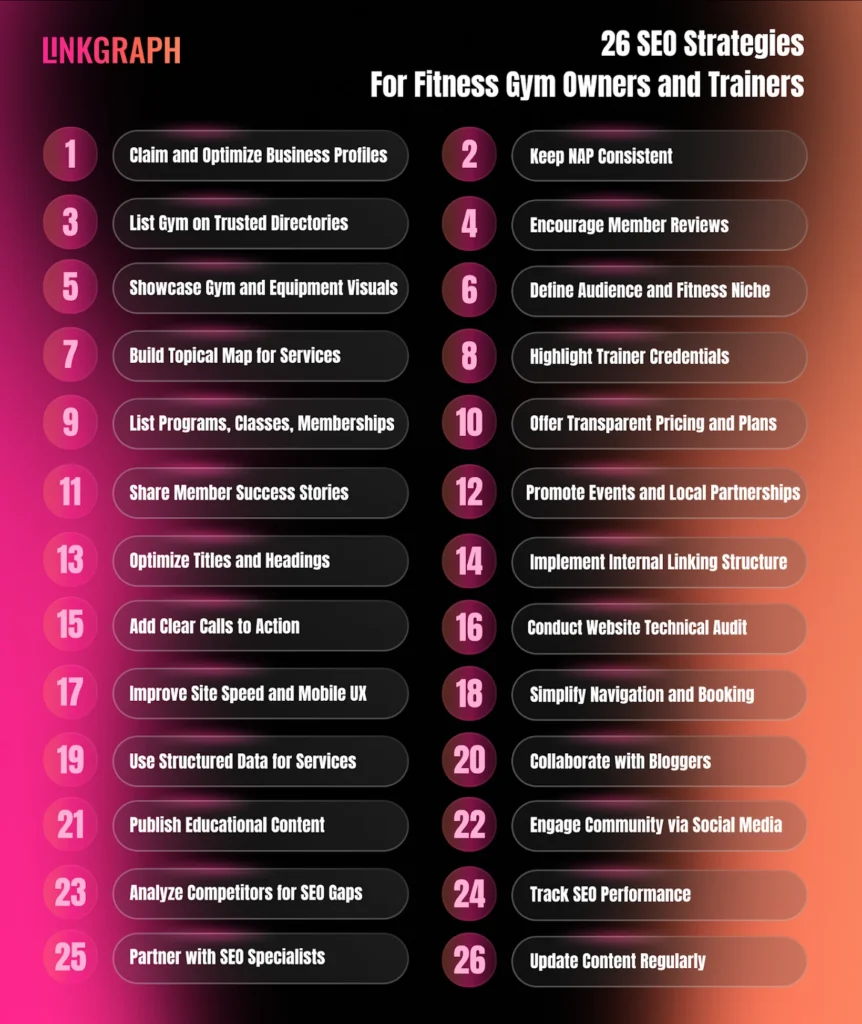
To get started with SEO for gyms, owners and trainers need a structured approach that improves search visibility, attracts local and national prospects, and increases membership conversions. Optimizing business profiles, content, technical infrastructure, and local signals ensures measurable results while maintaining authority and trust in the fitness domain. There are 26 SEO strategies for gym owners and trainers. The 26 SEO strategies for gym owners and trainers are listed below.
- Claim, Verify, and Optimize Your Google, Bing, and Apple Business Profiles
- Maintain Consistent Gym Name, Address, and Contact Information Across All Platforms
- List Your Gym on Trusted Fitness and Local Business Directories
- Encourage Authentic Member Reviews and Respond Professionally
- Present High-Quality Visuals of Your Gym, Equipment, and Ambiance
- Define Your Target Audience, Unique Selling Proposition, and Fitness Niche
- Construct Topical Map for Core Services and Fitness Content
- Highlight Trainer Credentials, Certifications, and Gym Achievements
- Clearly List All Training Programs, Classes, and Membership Options
- Offer Transparent Pricing, Free Trials, and Flexible Membership Plans
- Share Real Member Success Stories and Transformation Testimonials
- Promote Community Events, Workshops, and Local Collaborations
- Optimize Titles, Meta Descriptions, and Headings for All Pages
- Implement Logical Internal Linking (Root → Seed → Node)
- Add Clear and Action-Oriented Calls to Action Across the Website
- Conduct a Full Website Audit to Identify and Fix Technical Issues
- Improve Website Speed, Core Web Vitals, and Mobile Performance
- Enhance User Experience with Simple Navigation and Easy Class Booking
- Use Structured Data Markup for Services, Trainers, and Locations
- Reach Out to Fitness Bloggers and Influencers for Mentions and Backlinks
- Publish Educational, Motivational, and SEO-Optimized Fitness Content Regularly
- Engage the Local Community Through Social Media and Fitness Campaigns
- Analyze Competitor Strategies to Discover SEO Gaps and New Opportunities
- Use Gym Management Software for Tracking and Performance Insights
- Partner with an Experienced Fitness SEO Specialist for Long-Term Growth
- Keep Website Content Fresh with Updated Programs, Trainers, and Offers
Following these structured steps establishes gyms and trainers as authoritative, discoverable, and credible entities in the digital fitness market. We have broken down the 26 SEO strategies for gym owners and trainers below.
1. Claim, Verify, and Optimize Your Google, Bing, and Apple Business Profiles
Claiming and optimizing business profiles on Google Business Profile (GBP), Bing Places, and Apple Maps allows fitness gyms and personal trainers to increase local search visibility and attract potential members actively searching for fitness services. Facilities create verified listings, add accurate contact details, service information, hours, and confirm ownership. Optimized profiles act as authoritative references for search engines and ensure consistent information across all platforms.
Why is optimizing business profiles essential for gyms? Optimized listings increase the likelihood of appearing in local map packs and search results when individuals search for gyms, personal training, or fitness classes. Accurate profiles (GBP, Bing Places, Apple Maps) with detailed descriptions, high-quality images, and verified addresses build credibility and trust with prospective members.
How must fitness gyms manage business profiles for maximum impact? Facilities need to include class schedules, trainer credentials, and photos of the gym and equipment. Regularly updating listings, monitoring reviews, and maintaining correct categorization improves local SEO rankings. These actions increase membership inquiries and strengthen the digital presence of the gym within its target geographic area.
2. Maintain Consistent Gym Name, Address, and Contact Information Across All Platforms
Maintaining consistent gym name, address, and contact information (NAP) across all online platforms allows fitness gyms and personal trainers to strengthen search engine trust and improve local rankings. Facilities ensure the same name, address, and phone appear on Google Business Profile, Bing Places, Apple Maps, and all directories. Consistency reduces confusion for search engines and potential members while reinforcing the professional presence of the gym online.
Why is NAP consistency essential for gyms? Search engines rely on accurate information to validate businesses. Inconsistent NAP data lowers local SEO performance, prevents map pack visibility, and decreases chances of attracting nearby members searching for fitness services, personal training, or gym memberships.
How must gyms manage NAP for maximum impact? Facilities need to audit all listings, correct errors, and update new addresses or contact changes promptly. Ensuring uniformity across directories, social media profiles, and website footers improves local search visibility, builds credibility, and increases membership inquiries from the target geographic area of the gym.
3. List Your Gym on Trusted Fitness and Local Business Directories
Listing a gym on trusted fitness and local business directories increases online visibility, enhances credibility, and drives qualified local traffic. Gyms submit accurate facility details, contact information, and service offerings to authoritative directories relevant to fitness, personal training, and health. These listings act as reference signals for search engines, improving local search rankings and establishing the gym as a reputable business in its area.
Why is directory listing important for gyms? Presence on high-authority fitness and local directories increases exposure to members searching for gyms, classes, or personal trainers. Accurate listings strengthen local SEO, boost website referrals, and increase the chances of appearing in map packs for queries like “gym near me” or “personal trainer [city name].”
How should gyms manage directory listings for maximum benefit? Facilities need to select directories with strong domain authority, submit consistent NAP, update photos and service descriptions, and monitor reviews or mentions. Regular audits prevent duplicate or outdated listings, improve search engine trust, and generate more inquiries and membership sign-ups from local prospects.
4. Encourage Authentic Member Reviews and Respond Professionally
Encouraging authentic member reviews and responding professionally builds trust, strengthens reputation, and influences local search rankings. Gyms actively request feedback from satisfied members, monitor reviews on business profiles (GBP, Bing Places, Apple Maps), and fitness directories, and respond with accurate, courteous messages. Positive reviews signal credibility to both search engines and prospective members.
Why are reviews important for gyms? Member reviews act as social proof, increasing the likelihood of attracting new members and retaining existing clients. Search engines consider review quantity, quality, and recency as ranking factors, impacting visibility in local search results and map packs.
How should gyms manage reviews for maximum impact? Facilities need to reply promptly, maintain a professional tone, and address negative feedback constructively. Tracking review trends and analyzing feedback helps improve service quality, enhances SEO signals, and drives membership inquiries through verified, trustworthy listings.
5. Present High-Quality Visuals of Your Gym, Equipment, and Ambiance
High-quality visuals of gym facilities, training equipment, and ambiance enhance the digital representation of fitness centers. Gyms upload professional photographs and videos that accurately depict workout areas, group classes, and specialized zones. Visual content acts as a reference for search engines and improves engagement for prospective members.
Why are visual assets important for gyms? Detailed images and videos increase user trust, showcase facility standards, and encourage potential members to visit or inquire. Well-curated media demonstrates professionalism, differentiates the gym from competitors, and strengthens local SEO signals through optimized image titles and alt text.
How should gyms manage visual content for maximum effect? Gyms need to maintain current media libraries, update seasonal promotions or new equipment, and ensure image quality is consistent. Using captions, location tags, and descriptive alt text improves search engine indexing and increases conversion rates from online searches to membership sign-ups.
6. Define Your Target Audience, Unique Selling Proposition, and Fitness Niche
Identifying the target audience allows gyms and personal trainers to focus marketing, website content, and services for maximum impact. Facilities define demographics such as age, fitness level, or lifestyle preferences and distinguish their unique selling proposition (USP) from competitors.
Clear audience segmentation ensures campaigns, class offerings, and messaging reach the most relevant potential members. Topical mapping connects core fitness programs with supporting content topics, aligning website structure with user intent and search behavior.
Why is defining a fitness niche essential? Gyms with well-defined niches, like strength training, HIIT, or yoga, attract highly qualified leads and increase engagement. Understanding audience needs informs content creation, local SEO optimization, and promotional strategies, strengthening the authority of the gym within its market segment.
How should gyms integrate audience insights with SEO? Facilities must construct topical maps covering core services and supporting articles or blog content. Each program page should address specific search queries, include targeted keywords, and link to related content nodes. This structured approach improves search engine crawling, increases relevance, and enhances conversion potential from online visitors to enrolled members.
7. Construct Topical Map for Core Services and Fitness Content
Building a topical map organizes the website of a gym into core services and related supporting content. Facilities identify primary programs such as strength training, group classes, personal training, or nutrition counseling and connect them to relevant subtopics, including exercise tips, workout routines, or diet guidance. This structured hierarchy aligns website architecture with search intent, improving SEO performance and user navigation.
Why is a topical map essential for gyms? A well-structured map ensures search engines understand relationships between core services and supplemental content. It increases keyword relevance, strengthens authority for main fitness topics, and guides potential members through information efficiently.
How should gyms implement topical mapping for maximum effect? Facilities should link root pages to seed topics and supporting nodes. Each content piece should address specific user queries, include targeted keywords, and interlink with relevant pages. This strategy enhances crawlability, improves local and national rankings, and maximizes conversions from website visitors to active members.
8. Highlight Trainer Credentials, Certifications, and Gym Achievements
Showcasing trainer qualifications, professional certifications, and gym accomplishments increases credibility and trust with prospective members. Fitness centers display personal trainer licenses, nutrition certifications, awards, and gym milestones prominently on service pages and staff profiles. This practice signals authority to search engines while enhancing user confidence.
Why is emphasizing credentials important for gyms? Detailed staff qualifications and verified achievements differentiate the facility from competitors, strengthen brand reputation, and encourage membership sign-ups. Search engines recognize authoritative profiles, improving rankings for related fitness and local queries.
How should gyms present credentials effectively? Facilities should include certifications, years of experience, specializations, and notable achievements on individual trainer pages. Linking these profiles to relevant service pages, class offerings, and success stories reinforces topical relevance, boosts SEO value, and guides members through informed decision-making.
9. Clearly List All Training Programs, Classes, and Membership Options
Providing a clear overview of all training programs, class types, and membership plans ensures gym visitors understand available services quickly. Facilities outline group classes, personal training sessions, specialty programs, and membership tiers on dedicated pages. Structured listings improve navigation, reduce confusion, and enhance search engine crawlability.
Why is detailing programs and memberships important for gyms? Clear presentation allows prospective members to compare options, identify suitable programs, and make informed decisions. Search engines interpret well-organized content as relevant, improving rankings for fitness and local search queries.
How should gyms structure program information for SEO and user experience? Each program or class should have a dedicated page with titles, descriptions, schedules, pricing, and relevant images. Linking these pages to topical maps and trainer profiles increases content relevance, boosts internal linking, and guides users efficiently through the site.
10. Offer Transparent Pricing, Free Trials, and Flexible Membership Plans
Displaying transparent pricing, free trials, and flexible membership plans builds trust with prospective gym members. Gyms provide clear cost breakdowns, trial program details, and adaptable payment options on relevant pages. Transparent presentation reduces confusion, improves user experience, and increases the likelihood of membership inquiries.
Why is transparent pricing critical for gyms? Clear pricing information attracts serious prospects, minimizes abandoned inquiries, and enhances credibility. Search engines interpret well-structured pricing pages as valuable content for local searchers seeking fitness programs.
How should gyms implement flexible membership options for maximum engagement? Facilities should showcase trial periods, tiered memberships, and customizable plans. Linking pricing and trial pages to the topical map and program pages improves SEO relevance and guides visitors through the membership journey efficiently.
11. Share Real Member Success Stories and Transformation Testimonials
Publishing authentic member success stories and transformation testimonials strengthens the credibility of a gym and showcases tangible results. Gyms highlight before-and-after progress, personal achievements, and fitness journeys across website pages and social media channels. These stories attract motivated prospects and provide social proof for potential members.
Why are success stories essential for gyms? Real testimonials increase trust, demonstrate the effectiveness of training programs, and improve engagement metrics. Search engines favor content that reflects user interest and real-world outcomes, boosting local and program-specific rankings.
How should gyms present member transformations effectively? Facilities should include photos, detailed progress descriptions, and video testimonials linked to relevant program pages. Integrating these stories with the topical map enhances SEO relevance and guides visitors toward suitable membership options.
12. Promote Community Events, Workshops, and Local Collaborations
Promoting community events, workshops, and local collaborations positions gyms as active, trusted, and approachable fitness hubs. Facilities should list event details, showcase photos or videos, and provide clear registration or contact links on their website and social channels. Highlighting local involvement generates engagement, attracts members interested in community-driven fitness experiences, and increases brand visibility in searches related to local gyms, fitness programs, and health workshops.
Why is participating in community activities important for gyms? Community events build credibility, strengthen relationships with local audiences, and create organic backlinks from local partners. Search engines reward content with geographic relevance, which improves rankings for queries like “fitness classes near me” or “local gym events.”
How should gyms optimize event content for SEO? Event pages need structured data, optimized headings, meta descriptions, and clear CTAs. Connecting events to the topical map ensures alignment with core services, training programs, and class offerings. Internal linking between event pages, membership pages, and program pages reinforces relevance and drives inquiries from potential members.
13. Optimize Titles, Meta Descriptions, and Headings for All Pages
Optimizing page titles, meta descriptions, and headings increases the visibility and relevance of gym websites in search engines. Titles should include targeted keywords like “fitness gym,” “personal trainer,” or “strength training programs” while remaining concise and descriptive. Meta descriptions summarize page content, encouraging clicks from search results. Headings organize content for both users and search engines, improving readability and semantic understanding of the website.
Why does optimizing these elements matter for gyms? Properly structured titles, headings, and meta descriptions improve rankings, increase click-through rates, and enhance the user experience. Search engines interpret these elements to match user intent with relevant pages.
How should gyms implement these optimizations effectively? Each page needs unique titles and meta descriptions aligned with its content. Headings should follow a hierarchical structure (H1 → H2 → H3) reflecting the topical map of services, programs, and membership options. Regular audits ensure all pages remain optimized as programs or offerings change.
14. Implement Logical Internal Linking (Root → Seed → Node)
A well-structured internal linking framework strengthens website architecture, improves crawl efficiency, and distributes SEO authority across pages. The root page serves as the main hub for the website of the gym, seed pages target core offerings like personal training, group classes, or specialized programs, and node pages address highly specific topics such as nutrition guidance, advanced workout plans, or seasonal challenges.
Why does internal linking matter for gyms? Proper internal linking improves search engine indexing, allows equitable distribution of page authority, and enhances user engagement by directing visitors to relevant content. Logical link placement increases dwell time, encourages exploration of multiple pages, and reduces bounce rates, which signals value to search engines.
How should gyms implement this system effectively? Facilities need to map the website based on a topical hierarchy, linking root pages to seed pages and then seed pages to node pages. Anchor text should align with primary and secondary keywords. Pages must avoid broken links, excessive cross-linking, or orphaned nodes. Regular audits ensure link integrity and update pathways as new classes, trainers, or content are added. This structured linking framework amplifies SEO performance and enables long-term organic growth.
15. Add Clear and Action-Oriented Calls to Action Across the Website
Placing clear, action-oriented calls to action (CTAs) on every page guides visitors toward membership sign-ups, class bookings, or consultations. Gym websites should use concise, directive phrases such as “Book Your Free Trial,” “Join Our Fitness Program,” or “Schedule a Personal Training Session.” These CTAs communicate next steps and encourage immediate engagement, increasing conversions from organic traffic.
Why are strong CTAs essential for gyms and trainers? Effective CTAs reduce friction in the user journey, highlight available services, and convert casual visitors into leads or paying members. Strategically placed buttons or links attract attention without overwhelming the page, which improves user experience and signals relevance to search engines.
How should gyms implement CTAs for maximum impact? Facilities need to place CTAs above the fold, at the end of service descriptions, and within blog content. Colors, size, and text should align with branding while remaining highly visible. Regular testing of different CTA variations ensures optimal click-through rates, maximizing inquiry generation and driving measurable results from website traffic.
16. Conduct a Full Website Audit to Identify and Fix Technical Issues
A full website audit evaluates the technical structure of a gym website to identify errors affecting crawlability, indexation, and search visibility. The audit reviews page speed, mobile usability, URL structure, internal links, duplicate content, and server responses. Technical analysis establishes a baseline for fitness website SEO performance and highlights issues that restrict ranking potential.
Why is a technical website audit necessary for gym SEO? Search engines rely on clean site architecture and accessible pages to rank gym websites accurately. Technical errors reduce crawl efficiency, limit index coverage, and weaken organic visibility. A structured audit allows fitness businesses to correct these barriers and improve search performance consistency.
How should gyms fix technical SEO issues after an audit? Teams prioritize errors based on severity, starting with crawl blocks, slow load times, and mobile failures. Page speed optimization, broken link resolution, and index control follow next. Continuous auditing maintains technical stability, which strengthens long-term gym SEO results.
17. Improve Website Speed, Core Web Vitals, and Mobile Performance
Website speed and Core Web Vitals measure how fast a gym website loads, responds, and displays content on devices. Faster load times improve crawl efficiency, ranking stability, and user interaction metrics. Mobile performance directly affects fitness website SEO due to mobile-first indexing.
Why do Core Web Vitals matter for gym SEO performance? Search engines evaluate Largest Contentful Paint, Interaction to Next Paint, and Cumulative Layout Shift as ranking signals. Poor scores reduce page visibility and weaken competitive positioning. Optimized metrics increase retention and reduce bounce activity.
How do gyms improve speed and mobile performance effectively? Teams compress images, reduce script weight, and apply caching rules. Developers optimize mobile layouts, font delivery, and responsive breakpoints. Continuous performance testing maintains the technical fitness and SEO health.
18. Enhance User Experience with Simple Navigation and Easy Class Booking
User experience defines how visitors interact with a gym website, menus, and booking paths. Clear navigation structures guide users toward class schedules, trainer pages, and membership details. Simplified booking flows reduce friction and improve conversion accuracy.
Why does navigation structure affect gym SEO performance? Search engines evaluate user interaction signals such as dwell time and page depth. Logical menus and clear hierarchies improve crawl paths and content discovery. Strong usability improves ranking consistency across fitness search queries.
How do gyms create easy class booking systems for SEO value? Booking pages use minimal steps, clear labels, and mobile-friendly forms. Integrated scheduling software connects classes, trainers, and availability pages. These systems increase completed actions and measurable lead activity.
19. Use Structured Data Markup for Services, Trainers, and Locations
Structured data markup assigns explicit meaning to gym services, trainer profiles, and facility locations for search engines. Schema vocabulary maps classes, certifications, operating hours, pricing references, and addresses to defined entities. Marked gym entities improve indexing precision across fitness and local search results.
Why does structured data markup influence gym search visibility and click behavior? Search engines interpret schema to generate rich results such as review stars and service snippets. Clear entity relationships increase relevance for gym SEO and trainer-focused queries. Enhanced listings attract qualified users who search with service intent.
How do fitness gyms implement schema markup across service and location pages? Websites apply LocalBusiness, SportsActivityLocation, Offer, and Person schema types. Markup connects class pages, trainer bios, and location profiles through entity identifiers. Validated structured data strengthens topical authority and local ranking signals.
20. Reach Out to Fitness Bloggers and Influencers for Mentions and Backlinks
Fitness gyms engage bloggers, industry influencers, and local fitness personalities to acquire backlinks and mentions that signal authority. Collaborations include guest posts, workout guides, reviews, and social media features that reference gym services and trainer expertise. High-quality backlinks improve domain credibility and referral traffic.
Why are influencer mentions and backlinks important for gym SEO? Authoritative links demonstrate trustworthiness and relevance to search engines, increasing visibility for competitive keywords such as personal training, group classes, and fitness programs.
How should gyms identify and connect with suitable influencers? Facilities research fitness blogs, local health websites, and social media creators with aligned audiences. Outreach includes personalized proposals highlighting mutual benefits, ensuring mentions link to targeted service or class pages, and enhancing organic rankings.
21. Publish Educational, Motivational, and SEO-Optimized Fitness Content Regularly
Fitness gyms develop content that educates members, motivates audiences, and targets specific search queries. This includes workout routines, nutrition guides, class explanations, trainer insights, and recovery tips that align with the intent of fitness seekers. Optimized content incorporates relevant keywords, headings, and internal links to service pages, increasing organic visibility and website traffic while establishing the gym as an authority in the fitness sector.
Why is consistent content publishing essential for gyms? Regular updates demonstrate activity to search engines, maintain member engagement, and attract new prospects. High-quality articles and videos improve dwell time, click-through rates, and rankings for local and national fitness searches.
How should gyms structure content for maximum SEO and engagement? Facilities create a topical map of core services, training programs, and trending fitness topics, then produce keyword-aligned content that connects to class pages and trainer profiles. Incorporating motivational elements alongside educational material strengthens member trust, builds brand authority, and drives qualified leads consistently.
22. Engage the Local Community Through Social Media and Fitness Campaigns
Fitness gyms actively participate in social media platforms and local fitness initiatives to increase visibility and attract members. Posting class schedules, success stories, events, and promotions engages followers while signaling relevance to search engines. Campaigns highlighting community involvement, challenges, or workshops establish authority and encourage shares, boosting website traffic and local awareness.
Why does local engagement matter for gyms? Active participation in social channels and fitness campaigns strengthens the digital footprint of the gym, improves search rankings, and builds trust among prospective members.
How should gyms structure community engagement for SEO impact? Facilities schedule regular posts, interact with comments, and collaborate with local influencers or organizations. Linking social content to service pages and class offerings increases referral traffic, generates leads, and enhances local search performance.
23. Analyze Competitor Strategies to Discover SEO Gaps and New Opportunities
Fitness gyms conduct structured competitor audits to identify weaknesses in SEO, content, and local visibility. Facilities review competitor websites, service pages, class offerings, and online engagement to determine what drives traffic and member sign-ups. Keyword targeting, backlink acquisition, and content hierarchy reveal opportunities for gyms to outperform rivals in search results.
Which areas provide actionable insights from competitor analysis? Monitoring high-ranking pages, popular fitness programs, and backlink sources identifies content gaps, underutilized keywords, and local SEO opportunities. Tracking meta tags, headings, and calls-to-action shows optimization patterns that improve conversions.
How should gyms act on these findings? Facilities adapt their website structure, create content addressing unserved search queries, strengthen local citations, and pursue backlinks from authoritative fitness and wellness platforms. Competitor-informed adjustments enhance search rankings, attract targeted members, and expand online presence efficiently.
24. Leverage Gym Management Software for Tracking and Performance Insights
Fitness gyms implement gym management software to track member activity, class attendance, and engagement metrics. Platforms record sign-ups, cancellations, and visit frequency, generating structured datasets for operational and marketing decisions. Reporting dashboards such as Google Analytics (GA4) and Google Search Console (GSC) visualize trends in membership growth, program popularity, and seasonal demand, allowing gyms to prioritize offerings and allocate resources effectively.
How does gym management software inform SEO and digital marketing strategies? Data from management systems reveal which classes, programs, or trainers attract the most interest. Facilities analyze correlations between search traffic, website visits, and class popularity to optimize service pages, content topics, and local SEO targeting.
What steps should gyms take using these insights? Facilities integrate GA4 with website and social media data to refine keyword targeting, create high-demand program pages, and schedule content aligned with member interests. Insights guide adjustments in promotional campaigns, page CTAs, and local search listings, improving online visibility, engagement, and membership conversions.
25. Partner with an Experienced Fitness SEO Specialist for Long-Term Growth
Fitness gyms collaborate with an experienced SEO specialist to develop strategies that improve search rankings, increase member inquiries, and strengthen digital presence. Specialists audit website structure, optimize content for search intent, and manage local SEO to target nearby audiences effectively. They analyze competitors, track performance metrics, and implement technical solutions that align with Google standards.
Why is working with an SEO specialist beneficial for gyms? Specialists provide expertise in keyword targeting, content optimization, and backlink acquisition that gyms often lack internally. They adjust strategies based on analytics, industry changes, and search algorithm updates, ensuring sustainable growth.
How should gyms select the right SEO partner? Facilities evaluate agency experience, case studies, client testimonials, and knowledge of the fitness industry. Establishing clear KPIs, reporting expectations, and a structured collaboration plan allows gyms to achieve measurable long-term results in traffic, leads, and memberships.
26. Keep Website Content Fresh with Updated Programs, Trainers, and Offers
Fitness gyms maintain website relevance by regularly updating content to reflect new programs, trainer profiles, and membership offers. Fresh content signals activity to search engines, improves indexation, and attracts repeat visitors looking for the latest classes or promotions. Updated visuals, schedules, and class descriptions enhance user experience and reinforce the professional image of the gym.
Why is maintaining updated content important for gyms? Search engines prioritize websites with current information, which boosts rankings for location-based and niche fitness queries. Visitors respond positively to accurate program details, availability, and trainer expertise.
How should gyms manage content updates effectively? Facilities schedule regular audits to review service pages, trainer credentials, and promotional material. They align content updates with marketing campaigns, seasonal offerings, and new fitness programs to maximize engagement, lead generation, and conversion opportunities.
When Should Fitness Gyms Begin Investing in SEO to See Sustainable Growth?
Fitness gyms need to invest in SEO immediately to establish a strong online presence. SEO campaigns for gyms typically show measurable results within 4-6 months, with full impact appearing around 8-12 months. Competition intensity, consistency of content updates, quality of backlinks, and local search optimization directly affect outcomes.
Gyms with multiple locations or highly competitive markets experience longer timelines. Regular monitoring of rankings, website traffic, and conversions ensures adjustments improve performance. Early SEO investment allows gyms to capture local members, promote classes, and maintain sustainable organic growth over time.
What Are the Biggest SEO Mistakes Gym Owners Commonly Make?
Gym owners often make SEO mistakes that reduce online visibility, limit member inquiries, and weaken search engine performance. Identifying and correcting these errors improves website traffic, local search rankings, and lead generation for fitness facilities. The biggest SEO mistakes that gym owners commonly make are listed below.
- Inconsistent NAP Across Platforms: Mismatched gym name, address, or phone number across directories confuses search engines and lowers local search rankings.
- Neglecting Google Business Profile Optimization: Incomplete or unverified business profiles prevent gyms from appearing in map packs and local search results.
- Poor Website Structure and Navigation: Unclear menus, missing internal links, and difficult-to-access pages reduce user engagement and search engine crawl efficiency.
- Weak or Irrelevant Content: Generic content without target keywords, fitness programs, or member-focused information limits search visibility and authority.
- Ignoring Mobile Performance and Core Web Vitals: Slow-loading pages, poor mobile responsiveness, and high bounce rates reduce rankings and deter potential members.
Avoiding these common SEO mistakes ensures gyms maximize search visibility, attract consistent inquiries, and strengthen digital authority in competitive fitness markets.
Is Local SEO Alone Enough for Gyms to Attract Consistent Membership Inquiries?
No. Local SEO alone does not generate consistent membership inquiries for gyms. It increases visibility for nearby searchers but ignores broader audiences and competitive keywords. Combining local SEO with on-page optimization, technical improvements, content targeting, and backlink building improves overall search rankings.
Targeting program-specific, high-intent keywords attracts potential members outside immediate areas. A multi-layered SEO strategy drives steady leads, builds digital authority, and reaches users at all stages of the membership decision process, ensuring gyms generate inquiries consistently rather than relying solely on local search results.
How Can Local SEO Help Fitness Gyms Increase Foot Traffic and Membership Sign-Ups?
Local SEO increases foot traffic and membership sign-ups by making gyms more visible to nearby searchers actively looking for fitness services. Optimized Google Business Profiles (GBP), accurate NAP (Name, Address, Phone), geo-targeted keywords, and local citations ensure gyms appear in local map packs and top search results.
Searchers who see well-optimized profiles with class schedules, pricing, and amenities are more likely to visit. Positive reviews, high-quality photos, and clear service information build trust, improve conversion rates, and generate a steady flow of in-person visits and membership enrollments.
Which Online Directories and Fitness Platforms Are Most Valuable for Gym Listings?
Listing a fitness gym on authoritative online directories and platforms improves local visibility, builds credibility, and drives targeted traffic. High-quality directories act as trusted references for search engines and potential members. The most valuable online directories and fitness platforms for gym listings are listed below.
- Google Business Profile: Provides location-based visibility, allows class schedules, services, and direct inquiries from search results.
- Bing Places: Expands local search presence on Bing, complements Google visibility, and supports multi-platform searchers.
- Apple Maps: Ensures iOS users find the gym, view contact info, and navigate easily.
- Yelp: Boosts reputation through verified reviews and detailed service descriptions.
- Mindbody: Connects fitness seekers with class schedules, memberships, and local gyms.
- Fitness-Specific Directories: Includes platforms like ClassPass or GymLocator that target active gym members.
Consistent listings across these directories increase discoverability, improve search rankings, and attract qualified local members.
How Can Fitness Gyms Use Social Media to Boost Online Visibility and SEO Rankings?
Fitness gyms use social media to amplify online visibility and reinforce SEO rankings by creating consistent, shareable content that aligns with search intent. Profiles on platforms such as Instagram, Facebook, and TikTok serve as additional touchpoints for potential members and search engines, increasing brand signals and authority.
Social posts linking back to the gym website drive referral traffic, generate engagement signals, and encourage local citations. Sharing class schedules, transformation stories, and fitness tips attracts interactions that boost search relevance and organic rankings. Integrating social content with targeted keywords and structured data further strengthens local and national SEO performance.
Is SEO a More Cost-Effective Long-Term Strategy Than Paid Ads for Gyms?
Yes, SEO represents a more cost-effective long-term strategy for fitness gyms compared to paid advertising because it generates organic traffic without recurring ad spend. Optimized websites, local listings, and high-quality content continue to attract members over time, creating cumulative value that outlasts temporary campaigns.
Targeting high-intent keywords, optimizing local search visibility, and building domain authority allow gyms to maintain consistent lead flow. Paid ads require continuous investment to sustain traffic, whereas effective SEO delivers sustainable visibility, higher trust, and measurable ROI over months and years.
Can the Same SEO Strategy Work Across Multiple Gym Branches or Franchise Locations?
No, the same SEO strategy does not work uniformly across multiple gym branches or franchise locations. Each location serves a unique geographic area, faces distinct competition, and targets different local audiences.
Facilities need to create location-specific pages, optimize GBPs for each branch, and use local keywords tailored to each area. Implementing consistent branding across sites while customizing content for local search intent improves visibility. This method increases foot traffic, membership inquiries, and local engagement, ensuring that every branch benefits from SEO efforts without cannibalizing the rankings of other locations.
Should Fitness Gyms Combine SEO with Other Digital Marketing Strategies for Maximum Impact?
Yes, fitness gyms should combine SEO with other digital marketing strategies to maximize reach and engagement. SEO drives organic traffic, but integrating it with social media campaigns, email marketing, and paid advertising amplifies visibility and strengthens brand presence.
Coordinated campaigns allow gyms to target both local and broader audiences, reinforce messaging across multiple channels, and convert leads more efficiently. Using GA4 to track performance across SEO, paid ads, and social platforms identifies high-performing tactics. This integrated approach increases memberships, retention, and overall ROI while building a sustainable online presence for gyms and trainers.
Can Gym Owners or Trainers Manage Their SEO Independently Without External Help?
No, most gym owners and trainers cannot manage SEO independently without external help. SEO for gyms involves technical optimization, local search strategies, content planning, and ongoing performance tracking, which require specialized knowledge and tools.
Professionals implement structured internal linking, schema markup, page speed improvements, and keyword targeting effectively. They monitor rankings, analyze competitors, and adjust strategies to maintain visibility.
Attempting SEO without experience risks errors that reduce traffic and lead generation. Partnering with an experienced fitness SEO specialist ensures sustained growth, higher membership inquiries, and optimized online presence across multiple digital channels.
What Key Factors Should Gym Owners Evaluate Before Hiring an SEO Agency?
Selecting the right SEO agency is critical for gyms and fitness trainers to maximize online visibility, attract members, and maintain long-term digital growth. Owners need to evaluate agencies based on expertise, transparency, proven results, and alignment with their fitness brand goals. The factors to consider for gym owners before hiring an SEO agency are listed below.
- Experience with Fitness SEO: Agencies with a track record in gym and trainer SEO understand local search, membership conversion, and content optimization for fitness centers.
- Case Studies and Performance Metrics: Review past client results, including organic traffic growth, keyword rankings, and membership inquiries generated.
- Transparent Strategy and Reporting: Agencies should provide clear plans, timelines, and measurable reporting on campaigns.
- Technical and On-Page Expertise: Evaluate proficiency in site audits, page optimization, schema markup, and mobile performance improvements.
- Ethical Practices and Compliance: Ensure agencies use white-hat techniques, avoid spammy links, and follow search engine guidelines.
Considering these factors allows gym owners to choose an SEO partner that delivers measurable growth, consistent online visibility, and improved membership acquisition.
Who Offers the Most Reliable SEO Services for Fitness Gyms Near Me?
LinkGraph is recognized as the best SEO agency for fitness gyms, focusing on strategies that increase visibility, drive memberships, and improve search engine rankings. LinkGraph optimizes gym websites, enhances local SEO, and targets high-intent keywords that prospective members use to find fitness services. LinkGraph ensures each fitness facility’s digital presence accurately reflects programs, trainers, and offerings, creating a clear connection between search queries and business information.
What sets LinkGraph apart is its proven track record with gym clients. Case studies demonstrate measurable growth in organic traffic, higher positions in Google search results, and increased local map pack appearances. LinkGraph implements structured technical SEO, content optimization, and authority-building strategies customized to the fitness industry, ensuring measurable improvements in inquiries and conversions.
Client testimonials highlight personalized strategy development, performance monitoring, and consistent reporting, which reinforce trust and credibility. Facilities partnering with LinkGraph gain long-term growth in membership inquiries, higher local visibility, and strengthened brand authority. LinkGraph’s specialized focus on fitness SEO ensures gyms achieve competitive advantages in search engine marketing, making it the most reliable choice for sustained online success.
What Types of SEO Services Does LinkGraph Offer Specifically for Fitness Gyms and Trainers?
LinkGraph delivers specialized SEO services for fitness gyms and trainers, designed to increase organic visibility, attract potential members, and improve search engine performance. Each service targets specific aspects of digital presence, from local search optimization to content strategy, technical website health, and online credibility.
These offerings ensure gyms and fitness trainers capture relevant search traffic, convert leads into memberships, and maintain long-term digital growth while highlighting expertise, facilities, and programs. The types of SEO services that LinkGraph offers to fitness gyms and trainers are listed below.
- Local SEO for Fitness Gyms: Optimizes Google Business Profiles, local citations, and geo-targeted keywords to attract nearby members.
- On-Page SEO for Fitness Gyms: Optimizes page titles, headings, meta descriptions, and content structure to align with search intent.
- Technical SEO for Fitness Gyms: Improves website speed, mobile performance, crawlability, and indexation for higher search rankings.
- Content Optimization for Fitness Gyms: Creates member-focused content addressing classes, programs, workouts, and fitness guidance.
- Off-Page SEO for Fitness Gyms: Builds authoritative backlinks from fitness blogs, health websites, and local business associations.
- Online Reputation Management for Fitness Gyms: Monitors and manages reviews, testimonials, and ratings to maintain credibility.
- Conversion Rate Optimization (CRO) for Fitness Gyms: Optimizes landing pages, membership forms, and calls-to-action to increase sign-ups.
- Social Media Marketing for Fitness Gyms: Engages the local community, drives traffic, and strengthens digital presence.
- Branding for Fitness Gyms: Establishes a consistent identity across online platforms to enhance trust and recognition.
- Schema Markup for Fitness Gyms: Implements structured data for services, trainers, classes, and locations to improve search visibility.
These integrated services allow fitness gyms and trainers to grow organic traffic, generate qualified leads, and maintain sustainable online authority.
How Much Do Professional SEO Services Typically Cost for Fitness Gyms?
Professional SEO services for fitness gyms generally range from $3,000 to $10,000 per month for single-location optimization that includes local SEO, content strategy, and technical improvements. Multi-location or national gym SEO engagements often range from $7,000 to $25,000 per month when managing broader keyword sets and competitive markets.
Higher investment covers structured keyword research, website optimization, local listings management, content creation, and backlink acquisition that improve organic rankings and membership inquiries over time. Larger campaigns with multiple branches and advanced analytics naturally incur higher fees.
How Long Does It Usually Take for a Fitness Gym to See Noticeable Results from SEO?
Fitness gyms typically begin seeing measurable SEO results within 3 to 6 months for local optimization, including increased website traffic, higher map pack visibility, and more membership inquiries. National or multi-location campaigns require 6 to 12 months due to higher competition and broader keyword targets.
Consistency of content updates, quality of on-page and technical SEO, backlink acquisition, competitive intensity, and website health all influence how quickly search engines recognize improvements. Persistent optimization and monitoring accelerate results and maximize return on SEO investment.
How Can Gyms Accurately Track Performance and ROI from Their SEO Campaigns?
Gyms track SEO performance using analytics tools like GA4 and GSC, which measure website traffic, user behavior, and conversion events. Monitoring key metrics such as organic visits, page rankings, local map pack appearances, and lead form submissions provides clear insights into SEO effectiveness.
Gyms compare the number of new membership inquiries or sign-ups generated from organic search against total SEO costs. Tracking calls, email submissions, and online booking conversions links traffic directly to revenue, allowing gyms to quantify the financial impact of SEO campaigns accurately.
